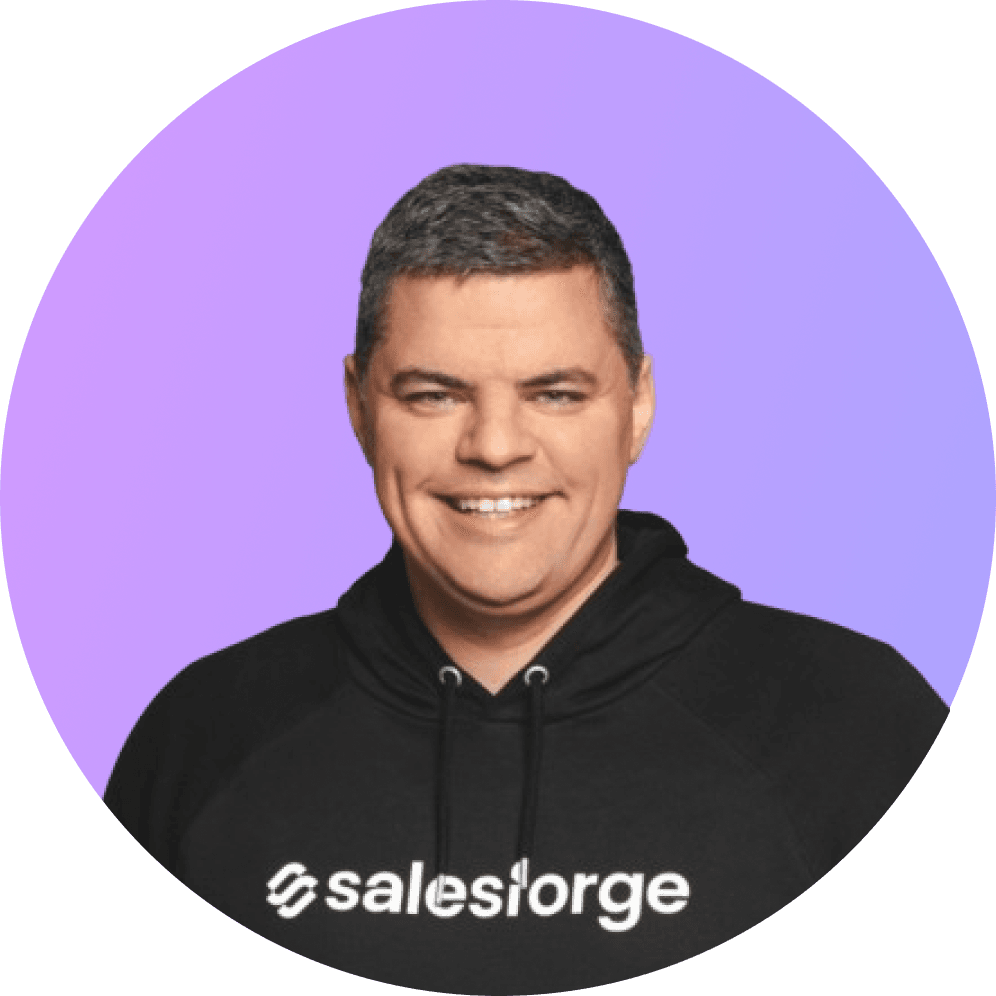
Episode No:129
Ep # 129: The Future of Sales: AI Agents, Automation, and Scaling Smarter ft. Frank Sondors (Co-founder & CEO, Salesforge)
Frank Sondors
(Co-founder & CEO, Salesforge)
Listen & Subscribe

Episode Summary
In this episode of the Hyperengage podcast, host Adil Saleh speaks with Frank Sondors, Co-founder and CEO of Salesforge, about the future of sales automation and AI-driven sales execution. Sondors shares insights on how Salesforge is tackling inefficiencies in traditional sales teams by leveraging AI agents to enhance productivity and reduce customer acquisition costs. He discusses the evolution of their modular software ecosystem, inspired by Apple’s seamless integration model, and explains why consumption-based pricing is a game-changer for sales organizations.
Sondors also delves into the challenges of cold email outreach, addressing the increasing scrutiny from platforms like Google and Microsoft, and outlines best practices to maintain high deliverability. Additionally, he explores the role of AI agents in outbound sales, their limitations, and the importance of a human-AI hybrid approach for optimizing results. Looking ahead to 2025, he shares his vision of building a lean and autonomous organization powered by AI-driven workflows, minimizing the need for large sales teams while maximizing efficiency.
| Key Takeaways | Time |
|---|---|
| Sales Reps Have High Attrition | 02:09 |
| Vertical Agents Will Dominate Market | 08:15 |
| AI Agents Reduce Labor Costs | 17:22 |
| Email Infrastructure Crucial for Success | 44:36 |
| AI Agents Create Business Ecosystem | 58:07 |
Transcript
Adil Saleh 0:02
Hey, greetings, everybody. This is the old your host at hyper engage podcast.
I bet you guys already looking forward to, you know, talking more about and thinking more about like how vertical agents are performing in the sales organization and success organizations. And we also, you know, looking for founders and products that are, you know, building these agentic platforms like AI agents for sales success support, like support is pretty big sales jobs, pretty big sales intelligence and all. So today we have the co founder and CEO of sales force. They have, like, a couple of other products that are more for email and outreach and outbound sales as well, but this seems like their flagship product, sales, Salesforce, Frank, thank you very much for taking the time.
Frank Sondors 0:51
Thanks for having me. Yeah. So a bit about me. So Frank, I've been in sales for well over a decade. Started my career in the big corporate in Google. It's definitely a corporate environment there, even though they want to be more of a startup. So this is my, really, my career in the world, sort of digital. And then after that, after three and a half years, I spent in a bunch of SaaS companies. So always, sort of in frontline sales roles, always talking to customers. And then in my last role, I led a sales team of about 50 individuals, where I sort of realized that back in the days when it was growth at all costs, that you know, the main lever to essentially target attainment was really plowing in more bodies essentially into the equation of generating more pipeline, generating more revenue. And I thought to myself, there's there must be, sort of a better way of doing things as an acquire that pipeline that you're looking for, that revenue that you're looking for, what we call in our world, the the bacon, we're all about bringing home the bacon. And, and I put to myself, there must be a better way to to get to those target levels that you're looking to get, but with a lot fewer individuals and and that means that the software itself must be you must be. You must be able to scale the software somehow and the process as well on that particular individual.
And the reason why this is important also from what we call CAC efficiency standpoint. So CAC meaning cost of customer acquisition. The reason why this is important is because if you look at macro level trends to acquire net new dollars in organizations becoming more and more expensive. More expensive. So And naturally, when you look at your sort of PNL, within your organization, you know what's costing you money, let's say in a software company, technology company, the main line item is actually labor, right? And the sales reps are really, really expensive. Now, what's the dilemma with, for example, with sales reps, is that typically, you know, there's a, what we call a huge attrition rate. So I always say, you know, I hired hundreds of sales reps in my life and also fired hundreds of sales people in my life. But typically, you would say that for every 10 salespeople that you hire, only one person. Is really that that natural, really the person, and that's really the max, really one person in 10, then two to three people sort of can be trained up to be somewhat good as the person that's really natural in this. Ultimately, I'm saying, you know, people are not born to do sales, right? So majority of them, or a good chunk of them, have to be trained up, and they have to be coachable, right? That they have to be open to feedback and open to change and wanting to progress and having the hunger internally. But really, the 60% of the population is what I typically call the dead weight. Really, you're not meant to be in sales. And a lot of people land in sales from different walks of life, straight out of college, you know, and whatever else that they're doing in life, right? They just couldn't find a better job. They just didn't want to work in McDonald's, whatever, you know, whatever their jobs that you're thinking are not great. But let me do sales. That's really the first sort of office job, like an entry point into some sort of tech company. So you would start, let's say, I know, as the SDR, etc, but really, a lot of people are just not born for that, to do this. They don't really enjoy the job, like, they don't want to be like, a lot of them are not coachable, like, they probably not enjoy the work, right? Because really, really hard, you know, psychologically, emotionally, to do it well, right? And do the grind and necessary, right? So that's why you have that sort of, you know, huge sort of, you know, drop off rate, really, within the sales population, and there's not much you can do about it. So essentially, sales leaders and companies have this huge attrition problem. They have to get a lot of people in. So there's a huge acquisition that happens from a hiring standpoint. Then a lot of people don't pause the probation period or essentially leave the company within the year. So that that means there's churn. So what I used to do, you know, when I had a sales team of 50, I used to hire people in advance, because I used to predict that every month about three people leave the organization. So I would rehire them early, so I can wrap them for at least for a month or two, because I already predict that people would leave every single month like so.
So that's just not very efficient, just generally, right? Hiring and then firing or whatever. People just going, you know, leaving, leaving their jobs because they didn't really enjoy the work. And some people just going to over to the next company because maybe just bored with what they think, whatever. So that's just hugely inefficient. And I thought to myself, What if, if there was a way to increase essentially, the output levels of the 40. Percent of the population, and then reduce the 60% essential population, the dead go down to zero, as close to 0% as possible, right? So, how, what? How would this software need to look like? And the answer is, actually, it's not just one piece of software. In our eyes. It actually because, you know, let's say, to build pipeline, you need to solve these multiple different problems, and that means, in our eyes, that we had to build these multiple different software. So actually, today we have six products, actually in total, but we have the core product. So that core product is called Salesforce, so that's where you execute your campaigns or your sequences, and we do that right now via email. We're just about to unlock LinkedIn was the second channel, and then we're about to also release void by the end of the year, so you can execute across the three main channels. But really that's the model ship product. And then around the model ship product, we're building these other sort of, what we call Jason forges that make the model ship product a lot more powerful. And you kind of set assembly, sort of like, like, you know, like Lego, essentially, where you only buy what you need. And we operate the consumption based pricing, so you only pay what you need, what you what you really need, from a consumption perspective, and and that also improves the CAC, right? Because the problem also in in the world of doesn't matter which business you're in, but essentially, when you're paying for for these, all these softwares within a particular organization, say, sales, then all of them add up, because you typically pay per seat in terms of pricing, you know? And like I told you, because people come and go, there's a huge, what's called license or seed utilization problem that companies have also, naturally, when the employees go to holidays and stuff like that, right, the seats are not being utilized. So I'm a big believer, just generally, the world decided towards this sort of consumption based pricing. So yeah, we're tackling these sort of different pains. And the reason why there's so many softwares instead of one we sort of in the world right now where we're, where we see that nobody's nobody's building, is what we call the apple experience. So essentially, as I mentioned, so building one piece of software for one particular pain, right? And you're assembling that, and it feels like this apple ecosystem. So Apple has, for example, Apple ID, right? That you log in, for example, into the into into your account. Well, we have forge ID, right? The way, can you log into different softwares and they all nicely talk to each other. So I thought to myself, damn, when I was a sales leader, I was using like 10 plus different softwares, so software to execute email, then another software to send videos, and then another software to, do, you know, proposals, a bunch of other kind of softwares I have, like 10 plus softwares just to build pipe for my team. And so that meant 10 different like, businesses, 10 different invoices, 10 different support teams. And I call this sort of the weirdest, called the Android experience, right? You don't feel like it's the apple experience, it's the Android experience. And not really like crisp and like nice, you gotta have that kind of ease of use and bunch of things that are integrated. Not to say Android is bad, but this is probably the best comparison I can find. And and this is why I kind of, by being, you know, sort of annoyed with my sort of former life as a former VP sales, I decided to put an end to this. And sort of, you know, two years ago, found two co founders through YC matchmaking platforms. And then, yeah, we scaled the business from zero to 3 million bucks in 12 months. So, you know, we must be on to something here, you know, and solving a real problem, I guess, for the folks. And then, yeah, currently we have 1000s of customers. And sort of about 12 months ago, we only had these three co founders in the business. And then right now, we have over 40 employees right now. So, yeah, interesting.
Adil Saleh 8:15
I'm so glad you mentioned, you know, the way you got inspired with these, these strategies with Apple and Android. Like, you know, how you living with the within the workflows of your customers, and instead of, like, making them juggle around different softwares. And of course, you know, human can only do much, and from a from my efficiency standpoint as well as the benefit standpoint, so how you cater this problem three years down? I know that there's like, 10s and, you know, 10s of more softwares in this space, and competition is always growing in the, you know, aisdrs and so much that I see, like, there's like, more than five that came in the past three years on just on our podcast. And now they are evolving. And a lot of them are, like, a lot of them are sales intelligence platform, and now they're like building their own co pilots, co agents, agents, all of this. So thinking of this vertical agents category, how do you see this as a founder, being in, being there for about three years with, you know, doing it at now, going off market. How do you see this category evolving? Is there going to be a, you know, multi billion dollar unicorn coming out of this category, because this is really going to define this category, or going forward, which is also, I'm seeing, like, a lot of these, these products are like, they're, they're like, one size fits all, like, it's just not specified to sales. They're like, GTM tooling that also do agents for sales. Like crew is one example. Like, they enable you to, you know, you know, build your own agents for any organization. And this kind of models I'm seeing, you know, from from growing into a bigger capital, as opposed to the specialized agents for sales, customer success, customer support, you know, revenue teams, all of this. So how do you see this from from a commercial standpoint?
Frank Sondors 10:00
Uh, so yeah, I think there will be definitely winners, what are called vertical agent winners. So yes, for each of the categories. So like sales, you will have at least 123, agents that will own the market, is my perspective. Now I'm going to talk about broader but, but definitely the verticalization is a thing for sure. So essentially, there's a huge changes happening in the world of sales, that world of marketing and world of customer success. Now one of the changes that you're describing is, yes, these AIs, yar, so it doesn't matter agents, essentially, they're coming in. Now, the problem with that is that agents are not the what I would describe the full answer to the problem. So the problem essentially, there's huge inefficiencies. There's a lot of labor. And just like in the world of robotics, right, back in the days when, you know, there's a lot of workers in the factories, right, assembling cars and all that stuff, there was that revolution, right, where the robots came in, you know, and now, you know, robots essentially are assembling the cars. We're seeing something sort of similar, in a way, as in, you know, there's a software revolution that's happening. There's a there's a lens happening, right, agenda, capable, etc, but ultimately, where the world is heading against what's called towards automation, and as much automation as possible, and agentic workflows, or agents, is just a means to the end, right? But there's other things that have to happen to to become really more sort of autonomous, more automate. Now, my take is that we will not gonna see the world where you just kind of have a bunch of agents running but we will see a world where humans will work with AI agents in tandem to maximize output levels and drive down costs. So the cost reduction predominantly comes from, predominantly comes from labor reduction, essentially, right? So that's where it comes from, and that's really the world that we're building, and I think a lot of other companies are building. And also, the former CTO of open AI is saying something very similar around the fact that, yes, we all wanna, you know, be fully, fully autonomous, but it's just not gonna happen, right? So the human will be always somehow in the loop for particular parts of the business. Now, the other reason why full on, maybe gender capabilities will never be a thing is because the regulation hasn't yet catched up, right? So what typically happens when AI, agents will do something naughty, essentially, or something will not go, you know, according to the plan, oh, we're going to have bad actors using agents, right for bad purposes. We're going to see a lot more regulation coming in. I think we haven't yet catched up sort of on that topic, particularly in the US, which is very important you you definitely see the European counterparts, you know, going very aggressive on the topic of AI, so that you have the act, etc. I don't think that's the right way to do things, right, but, but yeah, so we're definitely going to see this proper, yeah, verticalization, where things will be definitely shaken up. New players are coming into the arena and and a lot of the players though, which I think is not the right path to go, they just offer full on Agenda capabilities and then disregard the human part. Now, why this is important? So let's, let's take our example in our space. So we have a lot of what we call, we call them legacy providers in the space. The legacy providers have built the software. Built the software around bigger teams because the bigger teams means more revenue for the companies, which is why the software has been architected in a particular way, right? All the features and everything is designed for, you know, teams, workflows and how does that stack up. But the whole architecture has not been designed to accommodate agents to be, to be running right, so that you know you have, you have to re architect your potential, your whole software right to accommodate agents, because we are sort of what we call AI first, or agent first, and then kind of human second, if that makes sense, right to maximize the efficiencies. But we do not disregard, for sure, the human component, because we know it's a must have, and we know the regulation hasn't catched up, really the way that we the reason why. So I mentioned the legacy providers. I mentioned the newcomers in the space, and there's many of them, and it's very easy to build AI agents, right? But ultimately, let's say you are head of sales today at an organization. Doesn't matter which part of the world you're in, and you typically kind of have still the sales team, but you have a desire to reuse the headcount, because you are potentially responsible for the CAC EC and efficiently acquiring pipeline. But the problem with the agentic proposition is that you will use software A for the humans, and then you're going to use software B for the AI agent, so you're ultimately going to use two softwares to build pipes. So I don't believe ltimatelytimatelyithat that's really the world that we're heading into, because the smartest, really sales leaders in the world, they would want to execute their sales motions out of one software. So that's one software has to accommodate the humans and the agents. And that's the world that we're that we're building. I think the best comparison to what we're trying to build is what I always say, it's like a Google Ads account. So within a Google ads say only sort of five years ago or so. I can't remember exactly the timeline, but like a long, long time ago, essentially it was only possible to do what's called doing manual bidding campaigns in Google ads. Essentially, the humans would set the bids, and then the auction would run, and then the ads would show whether it's position, 123, etc, based on these multiple factors. And. Um, and, and then sort of few years ago, you got these, your new campaigns coming out, where you can just set up what's called the target CPA. So what's the cost per acquisition that you're really willing to pay? And then Google would use, like big data lakes behind the scenes to optimize the bids and set them accordingly towards the target CPA, right? So I you could call those agenda campaigns, or, you know, for, you know, these are automated campaigns, right? Because, as I said, automation is what, what, what the demand lies right, to automate as much as possible, and Agent capability is just a means to an end. And this is exactly how we're sort of building right now the software where, literally, we've done one view, we're looking to build these protocol, human campaigns. And doesn't matter whether you send emails or the LinkedIn, whatever. And then literally, the second line will be like, Agent campaigns, and you can literally compare, like a could be like an AB test, right, to understand whether they the humans perform better, right, from a conversion rate standpoint, or AI agents perform better. But I also so from apart from running AB tests and kind of proving out whether humans are better or AI agents, the other thing that you would do in the, let's say, bigger organization where you have a lot of sales people is that imagine, let's say you have hundreds of 1000 potential businesses that you go go after as a sales team, as a head of sales you will always assign the sales team to go after. Let's call the key accounts, or essentially the unit economics makes sense, right? And then there'll be the huge kind of long term. There's been a lot of accounts that doesn't make sense to apply the sales rep because it's just too expensive to apply the sales rep on those accounts. But if somebody will knock on outdoors, we will definitely want to collect, you know, the bacon, you know, so I bring home that bacon, but we will not apply the pipeline generation activities towards those accounts, because she does make sense. So what you what you can do? And actually, because the AI agents are typically 10x cheaper, just from a cost perspective versus a human labor, this is a fantastic example where for the key accounts, right, or for percentage of your time, this is where you apply labor, but for the other part of the time, you apply AI agents. Now, the agents are fantastic, specifically to build pipeline for your business, but I don't imagine the world really, where you jump on the call like with me right now, right? And where we're going to have a demo, quick demo, right? And you're going to speak to the agent. Maybe the only, the only one example where I could think of why I or somebody else would speak to the agent. There's only one example. What do you think
Adil Saleh 17:22
that is? I think, for, of course, for support, reasons, for, you know, to gain knowledge about product, about about the about the technology platform, all of this.
Frank Sondors 17:31
So typically, actually, no from, so, from the, you know, lot of the, you know, I question a lot of sales leaders, you know, why would they ever jump on the on the call with an AI agent to buy from an AI agent? And I think there's only really one, potentially reason, or maybe two, one would be, actually, that you would get from the get go, 20% off. And the reason why it's 20% off is because sales cost 20% of the revenue typically, right? So imagine if you were to get go, you would have this option, speak to a real human, or speak to an AI agent and get 20% off. And I think a lot so there will be people that will click on that option, right, just to get a better price. And then they would kind of more willing, more willing to speak to any agent. Now, the second reason why somebody would speak even without a discount, right? Why would somebody speak new agent, is because a lot of buyers really had bad experience with sales reps, so they this is also why they don't want to speak to humans. They just don't believe in sales people, essentially, anymore, and and they rather speak to an AI agent. And guess what? An AI agent can be, like, 100x more knowledgeable, because an AI agent would use, like, a vector database and share a rag behind the scenes where it could, you know, once you ask the question on the call, it could, literally, within seconds, answer any questions to you know that you may have, right? That's really the benefit of the agent is just a lot more knowledgeable, because a human cannot really answer every possible question. But the AI agent could, because all you do is just upload all the documentation about your business, your knowledge base, you know, playbook, whatever, right, and the agent will really extract the best possible answer to the question that the prospect may have. So So yeah, that's how I think about the world. Now. Where are we headed? As a bit as Let's go, there's a as a society, economy, etc, when it comes to AI agents. So we're on the right now. I think last year, we've been in a place where we see AI agents popping up. The next phase is we're going to see heavily, what we call swarm of AI agents. Essentially, there'll be AI agents teams working with each other. So it's just like a sales team. We're going to see that happening a lot more and a lot of different spaces finance, you know, sales, etc. But ultimately, the reason why somebody would get real big is just also the reason why some other companies got real big, like Google, Facebook, etc, and that's the data. So whoever has the best data, the most data in town when it comes to sales execution, is the real winner. And And then ultimately, because you know you could, like an AI agent is ultimately dumb, unless you feed the right context, right and. Right workforce and many other things, but to have to build what we call, what I would describe, the best rep for your industry and your ICP, you need vast amount of data. And that's why it's very good, so very difficult to go up against a Google, Facebook, etc, because those guys have so much data. Is and it's very easy for them to defend the turf. Because even though somebody would build, let's say, search engine you know, to go up against Google or anybody else you know, or to build the next Facebook like these guys, simply don't have enough data to go up against those guys, and ultimately, that will always crush you. So we have not seen, at least in our category, in the world of sales, that somebody would pretty much dominate the space because they are running execution on vast amount of data or and using that, say, as a training data for ml or Gnar, etc, and, yeah, so we have a data lake behind the scenes, and that's that's what we're building, and that's our defense, and that's our moat into the space. And we believe that we are headed, in the future more towards what we call an execution place, where we're going to be stripping away decisions from humans when it comes to execution, and we're going to be passing decisions to big data, and that's both on what we call the human path and the AI agent, puff. So let me give you an example. So imagine I have a lot of data, gazillions of that. Imagine I'm a Google of the space, and have so much data I can essentially predict anything, and I can try and, you know, reduce, ultimately, the errors that potentially will happen to sales. And essentially, you know, that's also where you you're wasting a lot of money, because there's a lot of what's called human error that happens, or just error that happens that you want to eliminate. And the best way to eliminate error is if you predict something, you know, using machine learning, etc. So I could predict, how can I generate for you, let's say, the max possible pipeline. I could predict when would be the best possible time to make a phone call to the prospect so that they pick up. That's a one prediction example. Well, we could do another prediction, When will be the best possible time of the day or day of the week to send an email to the prospect so that they respond. And again, that's, you know, something that you could predict using big data. That's not something that the human will be able to do, even if you're going to crunch a lot of data, your own data in Excel, and you're going to say, Oh, we're going to we see best performance rate, sort of performance during this time frame, etc. The problem is that people don't understand. They don't have actually enough data to make that conclusion. You need vast amount of data, so much data, and only then you could, you can execute, you know, comfortably with high, what's called prediction accuracy, and you will feel the difference in the results like same as in Google ads, you know, using the automated competitor, right? So this is a very similar to that. That's what we're building, and that's why I said, you know, whoever's going to have the best data, and the biggest amount of data in town, is really where, where we haven't seen a company Excel and do well. The problem why companies, especially the legacy ones, have not adopted or have gone down this route is because if you're increasing the conversion rates too much in the conversion funnel, then you don't need to hire that many reps. And guess what, all the legacy guys, they charge per seat, so it's not in their interest, really, to maximize the conversion rates to the max. And because that they want, because those companies to hire more reps. They want what I would describe sub optimal conversion rates so they do hire more whereas now, case you know, we don't care whether you have a sales team of one individual or 10 or one 1000 We don't charge per seat. We charge for the actual consumption of the software. And we're highly, highly incentivized to help our customers, because if we're going to drive very, very high conversion rates, then our customers start using more of our software, right? So we are highly incentivized to figure out a way how we can maximize the conversion rate, because customers will be willing to pay for more consumption, which means, you know, both parties are essentially happy in that regard, right? So that's how we're really thinking, how I think, how, where the world really said it. So I am, you know, personally, very, very pumped about sort of what's to come in the next few
Adil Saleh 24:06
years. Yeah, I mean, and also, I was thinking that how to make those, these agents specialize and have all the contextual information out of these wide array of different data points that you're giving building up the platform, or even even doing the onboarding. Of course, every customer of yours might have like different sales, you know, journey or onboarding. Journey, different product, different technology that they're using, you know, your platform for and within their customers they have like different categories, like divided based on segments of, you know, contract values and industries and all of that. So how you you're still like being a founder, but be able to make your agents contextually accurate for your customers. You know you're getting some information during the onboarding, like, how's that workflow? How you're actually feeding the right information to your to. Agents for each of your customers for scale.
Frank Sondors 25:04
Good question. So first, so the way that our agent is built, just for everybody to understand, is that it's built on top of our five products that we have as a company. So we have six products in total. Six product is the AI, is the RO AI agent product, but it sits on top of the other products that specialize in a particular area. So that could be, for example, email infrastructure, that could be email execution, that could be data, email warm up. So just to give you an idea, and then all these products essentially power agent Frank. And then when we build another product, it will power agent Frank. We're looking also to build, like I said, there will be an A swarm of agents. So there'll be other agent names, but the first one go call it after Google called it after me, because I've been in sales for a decade. But yeah. So how does the agent actually work, just generally, and for you to understand how we're looking at driving maximum possible conversion. So for now, the agent just works on email. That means we're doing outreach, so we're doing outbound. We don't yet do inbound, that will come at some point, but we that we have partners that do inbound, but on the urban front, the first thing that really needs to happen in our kind of heads, or, or when I was, you know, ahead of sales, is we need to find the list of leads, or we need to go after the best possible leads against our ICP. So what the customer does in our software, it, he sets the ICP and he sets the problem that they're solving. What is the value prop? Et cetera. And he could have multiple of these sort of value props and ICPs that is set up. And then for each of the sort of agent setups, they pick the right sort of value prop. So we call that, we call the seller data. What is it that we know about this particular customer and this particular product that we want to push to, to somebody out there, to that audience? Now, against this particular ICP and the value prop, what we do behind the scenes, programmatically, a bit like Google, we're trying to find the best possible individuals across multiple databases in the world to maximize lead coverage against the ICP that we have on hand. Then when we have that list, let's say we have 1000 individuals. It's not like we send to every single one of them a template. We actually send the best possible, highly most relevant email that you can So, how is that? How do you do that? Typically, as a human, so, as a human. So when I used to build my own pipeline, I would go on LinkedIn, and I would just literally check and try to find a hook, you know, try to find, you know, what is the I could say and hook them based on what I see on LinkedIn, but also on the website, maybe on Google search and other sources. And guess what? We do exactly the same. It's just slightly faster, right? So it would take me, I don't know, 10 to 20 minutes to craft. Would be a really good email, because you know that research is, the, is, the is the biggest time suck. So that's where, for example, one of the workforce kind of comes in, where we essentially go and crawl the web about this particular person in that company. So yeah, we access LinkedIn, we access in real time. We access the website in real time. We access the web in real time. And we're trying to figure out, okay, what do we know about this individual based on publicly available data that anybody has access to? And we can actually also query serum data. So for example, maybe new serum. There's some information about this prospect that we can also use, and so we call that the buyer data. So, so we essentially match the seller data, so your value prop, the pain you saw, what's an offer, what's the cost of inaction, and the buyer data. So we stitch that together, and then we compute on top of that. So you can use a bunch of different llms, whether that's GPT four, whatever you know, Claude, you can we can have our own self hosted models, bunch of different kind of things that we do behind the scenes where we're trying to figure out what works what doesn't, and this is where, for example, the vast amount of data comes into play, because you can ultimately compute contextually, highly relevant email in any language for any industry and for any ICP, which is what we do based on customers data, and then we execute that email, right? So it gets sent out, whether that's in English, French, German, you name it. And then naturally, if the prospect ever applies back to us, then a typical agent setup will have a rag as a rag, essentially, is where you upload a bunch of information about your about your company, so the sales playbook, pricing, FAQs, a bunch of other things, right? It's like a database, like a knowledge base that a typical company has, but there's a lot of information stored. So when the prospect says, Hey, how are you different to this competitor, or to this other aisdr, or this etc, then we can quickly respond, literally within a few minutes, and then it fully autonomously, actually books in a meeting, right? So it has a goal. We set a goal for the agent, the agent, so every machine that you're using or automation or always thinking back of your head that you need to give it a goal. What is the goal that needs to be achieved? How do we generate the email? Or how do we How does the process work like so that we achieve the conversion events that we or micro conversion could be micro conversion, micro conversion event, but for us, meeting book is a macro conversion. How can we build and a machine that actually is able to get you to there? So how and how do we train? How do we sort of penalize it? How do we say, good job, you know, and so and so, all these things that need to happen, right? So that the more of this that happens, the more learnings there are in place, the better it works over time, the better the. You know, the customer is more and more happier, right, using the software. So typically, to get to a fully optimal, let's call it level. It's a bit, again, a bit like Google ads, ads, so you have to put some money in to actually pay for an agent. And there's a bit of an optimization phase. And that typically happens in, you know, two to four weeks. Especially, you know, you definitely nothing happens in the first two weeks, because in the first two weeks you do what we call what we call warming up the infrastructure, you're setting it up and, like, literally nothing happens in those two and then really, the, you know, basically giving
Adil Saleh 30:29
the right context to, you know, off your ICP, to to the to the agent, to the AI, you're getting all as much information from the customer as possible.
Frank Sondors 30:38
Yeah. So typically, like, if you're using a proper agent, like, unfortunately, it's kind of weird to say, but nothing happens in the first two weeks. And that's where do you kind of, let's go to prep phase kind of happens, right? And, and essentially, you're prepping the email infrastructure, the context you're doing everything. It's like onboarding a rep. Think of it this way, right? So imagine you're worried the same, like an AI, SDR, and then multiple things that have to happen. So we can increase the chances of success. And AI is the still fail, and a lot of them have, like, a huge turnout, etc. We can go into that in a bit so they can still, they're still prone to fame. But how can you maximize the chances of success? It's just the same, like with a human. The human joins in the company. It has to go through this onboarding process, right? But the good news with the with AI agent, you only do it once, right? Whereas with a human, you do it every time, and every human that you onboard, right? That's also the problem there, right? So that you're eliminating and so why do AI agents don't work, right? So a lot of people also on LinkedIn always say, AI is the odds are garbage. They were never going to work. Well, first thing that people don't think about because is that this technology is about a year old. Speaking, you know, just like you mentioned, there's a lot of companies popping up. They try to make it happen, but still, the tech is in its infancy, and of course, a lot of the times it's just not gonna work in the first year, right? But guess what? There are a lot of smart people that are working on this tech. We're one of those teams, and we're gonna, we're trying to figure out how to make it work, you know. And it's not like, you know, easy. It's not like you can say one plus one equals two. That's not how it works. It is a lot of trial and error that happens to to because ultimately, what you're trying to do is you're trying to replicate, in a way, a human workflow to an extent that it works really good then, and the performance, like, is really good, and the average sales person in the organization. So my take is, you know, the best SDR, let's say in the company, will always outperform in the agent. But that, you know, as I said, it's like one in 10, right? If you, if you're really going after the the creme de la creme. So if, if the take is like, Okay, we need to build an AI agent, or what does matter, or full on automation in a way that it will outperform anybody who's like, average, then it's not that easy, actually, just generally, right? So if the tech only exists for about a year, typically, to do something like this properly, it takes about two to three years from kind of looking at other sort of tech. You know, how tech has evolved in other places, it's not that fast. But my take is, like this year, next year, a lot of these companies will be crushing it, because essentially, there's a lot of error that you have eliminated from the equation, plus the technology on the llms and everything has massively, massively improved. You know, look at the all those billions of dollars that are being plowed into this tech. Guess what? The net benefit of that is that all these companies will benefit and will just get better. So that means the chances of AI agents failing reduces massively over time in all different places. Now the reason why it will still not work, even though you're going to build the best best, let's go the agent. So the first prerequisite to an AI agent to work, let's say in sales, you need to have a PMF, you know, product market fit. And we have a lot of people that coming to us. They just build a product and like Frank, we're two, two founders in this business. You know, we don't know how to do sales. We don't feel comfortable hiring a person and hiring maybe a consultant agency just too expensive. So we want to try your aisdr and see how it's going to go. No so no product market fit. They just want to see how it's going to go. And I think there's a lot of people that are excited about the gender capabilities, especially like early stage founders, because the, you know, they want to build, like a new gen company, big believers in AI, you know, they definitely want to use AI to also grow the business, etc. But it's not just not just not going to happen a lot of time. So yes, we, for example, we definitely took, you know, a lot of you know, risk to avoid these customers. But we also learn from that. So we understand that if a customer doesn't have PMF, the probability of failure is very, very high. Because, you know, this is just how it works. You know, it's not like, you know, everybody's surviving out there when it comes to the startup world. So, so that's one thing, but the second thing is, like, even though you have product market fit, so let's say you've been a company you have hundreds, many 1000s of customers, and you're like, Okay, I want to use this AI agent to to either improve efficiencies, you know, or just, you know, generate more pipeline, you know, from from this channel, right? And again, it's a similar thing like to Google ads. You're going to put some money behind, but what you need to have in place is what's called Two. Channel fit as well. It's a product channel fit. So you have a product that you're selling, and this product maybe is only likely to be sold, you may likely get traction only in particular channels.
Adil Saleh 35:10
And the channel maybe Instagram, maybe tick tock, but not Google, yeah, exactly,
Frank Sondors 35:14
yeah. And not Google. That's exactly the same thing here. So let's say you're selling a B to B product, and the typical channels and outbound in B to B is like call calling LinkedIn, which was still works today nicely, and called email, and it does work. And you so you look at these three channels, and it doesn't mean that all three of them can work. Maybe only one will work, but maybe two will work. And let me explain. So sometimes one channel is what's called an assist channel. So I'll give you an example, like I used to have the sales team of 50. So what we would used to do is we would send an email, and then within a few hours, essentially within 25 we would call, but we would never bank on the fact that we book a meeting from the email. So we would call up and say, Hey, John, do you get my email? It was not about booking the meeting or email, it was just about an assist channel. So you send that cold email so that you can call and ask them about, you know, whether they received an email just recently saying it's urgent, you know, we don't want to, you know, you want to talk about particular pain. So, and that has worked very nicely, and then we just look at the email as an assist channel, right? So we just send an email and we call quickly, immediately after that, so we have a good reason, essentially, why we called up that particular person. So, so that's why you have to look at, you know? You know there needs to be about describe a strategy, ultimately, right? So you have all these channels on how you can acquire customer. Your goal is to naturally acquire customers profitably, especially these days, right? There's nothing more growth at all costs. And sometimes you need to combine the channels. And sometimes people think, okay, I had this one, actually example, where I had this customer, and everything was fine, and then I looked at the website and it was horrible. It was horrible. So imagine you will send a cold email, and you may have the best email, and the best AI is, yeah, doesn't matter. But then once the prospect bump onto your site, they will, I don't think they will want to talk to you like, you know, it's also like these, what I call baseline problems that need to be solved as a business. And guess what? A lot of businesses are still not solving these baseline problems. How, what is your presence on website, on LinkedIn, right? Let's say, in our case, you know, our ICP, so ideal customer profile sits on LinkedIn all the time. So if I have, like, weird profiles, you know, not optimized, etc. It reduces the likelihood of engaging with me, right? So all of those things need to be optimized before you decide to go in with with cold email, for example. And and a lot of founders also don't do anything else to increase, for example, the probability of seeing results from cold email, so, or aisdr, so how could you do that? So there is a concept that exists in the space called inbound. Sorry, inbound, inbound, let outbound. I can't remember anyway, something to do with, starting with inbound and outbound. There's a concept I show, sorry, it's not coming to my mind. It's been a really long day, but essentially, what you're doing is you're, you're feeding the minds of your ICP for a bit before you getting in touch with them. Cold, typically, this would be called, sort of warm outbound, what's described. So that means, imagine you connect with your ICP on LinkedIn with about 100 connections per week. And let's say I have, you know, 10 people on my team, they're connecting also to about 100 people. So that means every week we connect to about 1000 ICPs in our space. What do we do? Then we craft really great messaging and we talk about the problems that we solve, so that when we then send a cold email to that particular prospect, it's not really cold because they've already been exposed to our content, which then increases the engagement rate within the email, reduces the spam rates and bunch of other things, and makes
Adil Saleh 38:46
actually keeping it multi touch before reaching out. Yeah,
Frank Sondors 38:50
yes. And so this is what's called a purpose strategy. It's not like, like, yo. Let me use the CI agent and hope for the best, and then then they complete
Adil Saleh 38:59
the emails. Yeah, 1000 emails a week. How do you see like email platforms, blocking these blacklisting the domains for sending out, like, mass level cold emails. Ai generated emails I know, like six, seven months ago, Google admins got shut down, and, of course, emails Camerons got shut down. A lot of her friends, you know, running cold email outreach platforms. They're worried about it. So how? What's your viewpoint on it? How is it applies to your platform? One of the platform you have for email outreach,
Frank Sondors 39:33
yeah, one of the forges. So, yeah. So what we're seeing today is that Google and Microsoft are doing a lot more policing just generally when it comes to the email traffic, and it's very important that you play nicely with those two players. Why? Because they own over 90% of the email traffic in B to B. So if those two guys are pretty much a monopoly in B to B, and actually, you know their apps, Google workspace and MS 365 are the. Largest apps in the world. You know, they have a lot of control, and they dictate whether you're not in the primary or what happens when your emails, etc. Now the reason why you have to play nicely, you have to understand that you cannot disregard email as a channel at all. Why? Because email, arguably, still what's called the has the lowest CAC, lowest CPA, so lowest cost per acquisition. Now if you understand that sending emails is relatively cheap, you need to just to make it work. And unfortunately, sending any form of emails doesn't matter. With the AI agents or not is difficult, just like running Google Ads campaigns is difficult. You need to know what you're doing. You can't be like an average Joe. Let me just, you know, put in 10 bucks and see what happens. Unfortunately, that's not how you know it's not going to work out. It is definitely more more complicated and the the at least you know, the one thing I can tell you know, if you, if you, if you're going to fail in in cold email, it's not going to cost you much, but if you're going to fail in Google ads, it's going to cost you a lot. It's like a bottomless pit. You know, you can just keep on chucking cash in Google, but in cold email at least, you know you're going to spend like, 200 bucks, 2000 bucks, and you will have some learnings at least that you can generate whether this channel is actually working for you or not. Now, going back to the topic around, sort of Microsoft and Google, etc, essentially, the problem that's happening is that there have been a lot of sales organization. There's just a lot of businesses have been sending a lot of emails, right? And the number of emails is into into huge, huge numbers out there. You can look at the estimates how many emails are being sent all around the world, and the number of emails is massively increasing due to all the automation softwares and marketing, sales, etc, right? So there's more volume in the ecosystem, and Google and Microsoft have to handle more volume. That's problem one that they're facing right now. Problem two that they're facing right now is there's a lot more bad actors in the email ecosystem, especially considering, you know, with all the stuff that's happening on the world of AI AI agents, these capabilities can be used with the bad stuff. What is the bad stuff? Ransomware, for example, you know, essentially sending something nasty to a big organization, an employee will download that attachment, whatever that is, and that's it. They're penetrated, right? Guess what? A lot of big fortune, 500 companies that use these anti spam softwares, you know, proof point mine, you name it like a bunch of them that they use. So, for example, landing with a cold email in that environment is, some people say, impossible. It is definitely possible. It's super difficult. Like, super, super difficult. Because apart from Google, Microsoft, having, you know, their security level, then these organizations will increase the security level, typically within Microsoft, and then they would use on top of that, like an anti spam software, like, it's super difficult essentially land into that environment. So essentially, the barrier to entry in the world of email is massively increasing over time. There's more policing, Google, Microsoft, introducing more and more policy every single year so that it curves down the you know, different definitely going after what's called the bad actors. So, but it definitely will have also impact on any form of, essentially unsolicited emails or commercial emails also going out. It will also impact that channel really badly. And I just spoke to a customer just prior to this call, saying, Frank, listen, I tried so many tools already, and none of them, none of them are working, including yours. And it's it happens, right? So people are just using it, trying it. But you know, I had a look at the account of this customer, and unfortunately, they're not following best practices, and it's just not going to work. So I mean, if you're even failing in one area, everything is going to, you know, go down and drain. So what are the areas typically, of success? And it's not about AI, is the answer agent or not? What is success in the world of email today. So one is what's called email infrastructure. So we talked about, there's a lot more policing about Google, Microsoft, etc. So the solution to that, and we do with one of our products, is to set up these, what's called secondary domain, so these essentially permutations of your primary business domain. So let's say we're going to take an example. We have walmart.com as about primary business domain, and we want to contact a lot of suppliers, you know, via cold email, right? They maybe don't know us, you know, as an example. But instead of using walmart.com we would you should definitely set up, you know, domains like Team walmart.com try walmart.com and so on and so forth, essentially. And then they would redirect to the primary business domain, and then against the secondary domains, we would have set up the email accounts for our sales team to use. Why are we doing this? Is because if I'm sending these emails to another business, and I have never reached out to them, these emails are classified, typically as emails coming from an unknown sender. An email from an unknown sender has a high
Adil Saleh 44:36
they learn in the mostly spam or promotion. No, it's
Frank Sondors 44:40
not about actually landing a spam by the way. It's what is it about is that these emails are what's called high risk emails for that organization, especially if they're bigger ones. So that means it will go through a lot of security checks, not just by the email service provider, being Google, Microsoft, etc, but by some other internal sort of systems. So essentially, the emails will be scanned for, you know, potentially for. Somewhere, much of other things, right? But essentially, if you've never been in touch in the past, then what may happen to you? A you may be reported for spam. Because, you know, if you're reaching out cold, a lot of people get a lot of emails. They don't want to receive these emails. They're very likely to click on the spam button. That impacts negative your email reputation. So let's say walmart.com that's why we should not send emails from walmart.com because it may negatively impact our reputation. This is not a big problem for the big guys, but it's very a big problem for the small guys. If you've been around for less than five years as a business, this is where you definitely may have a problem. And the reason why I'm saying less than five years is because domain age matters a lot when it comes to the ability to generally right? So salesforce.com has a much better domain age than Salesforce, for example, and that's because they've been around for decades and decades and decades. So Mark Benioff, the CEO of Salesforce, you could use blast bunch of emails, and he fine, because he built that reputation over decades up. My business doesn't even exist for two years. I'm like a nobody in the world of email just generally. So if you're going to send too many emails, I will ruin the reputation of my domain. That means, yes, the many of my emails across my customer base, investors, they're all going to land in spam. This is why you need that infrastructure. So that's pillar one of success in email. Pillar two is using a software that's designed for having great mobility. So we have Salesforce. We designed it to improve liability and the legacy companies that are in our space, they their take on the world of email durability is that the accountability lies with the customer rather than the software. But the problem with a typical business is that a sales team is not equipped to really solve the dubility. They don't have an email durability expert. You typically will never get a head count for that, and the engineering team in the company also doesn't know much about durability, right? So they're not really equipped to solve that problem. So you need to use a software, and there are quite a few in the market that specialize in email durability. So choose one of them and use them point three. And that kind of relates to the whole world of Google, Microsoft is the copy problem. So sending these days templates is a really bad idea. So a lot of people like Frank, what template are you sending? It's a really bad idea. Why is it a bad idea? So imagine you send a template to like 100 people, and then some people will report that template as spam because you just didn't, you know, needed whatever, whatever the problem was, but they can report your spam. What does Google do today? Google uses its own LLM so large language model, Gemini, to associate spam reports and spam rate with the content in the email. So if you're getting too many spam reports, and then Google starts looking at the content, and then you're gonna be landing in spam, not because of your domain or your IP or something, but because of the content, the static email template. So the answer to that problem is what I would typically say, computations, so or essentially sending a unique email highly relevant to that person. So I mentioned to you the way we do it, we'll look at the cell data, the buy data we compute we send by
Adil Saleh 47:46
unique, you mean you'd write it yourself. No,
Frank Sondors 47:50
I mean, I mean you can write it yourself, right? So, but the problem with that is it just takes time, right? But, or you can use an AI agent or some form of automation to compute these emails that will essentially craft these unique, short, snappy emails that are as highly like 15 other
Adil Saleh 48:03
other like outreach sales teams. They do the maybe use the same str, and they get spammed. And, you know, Gemini identifies, hey, this is a spam content. How do you like mitigate that?
Frank Sondors 48:19
So, I mean, Gemini or other large language models, cannot really know if it was aI generated or not. And there's a lot of people that say, AI can identify whether this content is AI generated or not. The thing is, people write, you know, people use chat GPT a lot. Even when humans, I use chat GPT. I write a content and it's like semi AI generated, right? Essentially, it is not really properly possible to identify whether content has been AI generated or not. At least today, I don't believe the tech is there, but essentially, what Gemini does, it looks at patterns. It looks like, what is that? Is that? Is it the same copy that was sent and circulating? If the answer is yes, and it got a lot of spam reports, then this copy should land in spam. So to to combat that, you need to figure out a way of how you really craft a unique email to each and every recipient. Because if you're not going to do that and you are receiving spam reports, by the way, if you're using Google, for example, you could look at post masters as a as a consult, just to see what is your situation, etc. But you need to figure out a way, especially if you're doing things at scale, at a bit of scale, what is a bit of scale? So, I mean, if you're sending already, you know, over 50 emails as a sales rep per day, you definitely, definitely need to be thinking about, actually, not 5030, emails a day. 30 emails a day. If you're a sales rep, and you are sales rep and you're sending more than 30 templated emails per day. You need to figure out ways of how to how to actually compute, how to make them, you know, different. So the final thing is, apart from the copies, the targeting. Targeting is a very easy thing to explain. You may we may have the best copy, best infrastructure, best sending tool, but if you're tired, you're
Adil Saleh 49:57
knocking the long door, yeah, nothing will happen.
Frank Sondors 49:59
Yes, and this, these are the four pillars of success. And doesn't matter if you use the eye agent or not, it just it helps you to do it, arguably, faster, cheaper, whatever, but you can still use humans across those four pillars, right? So I just thought it's
Adil Saleh 50:14
slightly more expensive, absolutely. Yeah. I mean, you know, it's, it was, it is so interesting, the way conversational AI is evolving. At some point we thought it's it's going to be completely human replaced. It's going to act as a human brand. Even smarter than that, a lot of customer support has been replaced. Is intercom is the big example in the recent recent times. How do you see, like conversational AI evolving within your organization. How you do? You do support? Your support agents? I'm sure you are AI first company. So you must have some AI involvement with children in the loop for smaller accounts, maybe some for big accounts. You have account managers. So how is that journey with the customers, and how do what's your viewpoint on conversational AI, especially on this
Frank Sondors 51:02
good question. So it depends on the number of tickets that we have as a company. We don't actually have that many. That means, you know, generally speaking, we have a quite a good software so we don't have that many bugs, and hence we don't have that many tickets. Hence, the pressure to use AI is pretty low, so we try and actually use it in a limited fashion. Why limited fashion is because when a customer reaches out to us, they are talking about the real bug in the system. Any I capability conversation, I cannot solve bucks. It can definitely pull out an answer from a knowledge base and answer that yes, if we have a lot of those tickets, I mean, maybe we're doing a bad job in the software itself, which is why people are asking a lot of tickets in chat. But we're trying to do a good job in the software so people don't go to chat and ask like, you know, these dummy questions. Let's go do it, right? So then this is when you would use conversational AI a lot more, right? So you would pull, you know, data from the knowledge base, and you answer them like, super fast. So it works, definitely for a lot of organizations, right? Because, you know, let's say, with intercom, it only costs, like, 99 cents to answer the question. It's much better to do that than actually plowing humans. But in our case, if somebody reaches out to support. They're reaching out about a real bug, and we want to solve that as soon as possible. We want to make sure that they know that the human is on it to solve the bug. Because I wish, actually, that I could build some sort of AI agent that could just go and solve the bugs for my customers, like, super seamlessly, super fast, right? By the way, that's an idea for somebody, right? Say, if somebody is able to do that, somehow I will be one of the first customers, you know, to do that. And, yeah, because, because, the dilemma is that with conversation AI, the biggest problem is, like, is that the the human has a very specific question that typically relates to something like a bug, essentially, and then you can't, like, the human has to be involved. And if majority of times you are experiencing, you know, tickets that have to do with bugs, etc, then using AI, it's not very great idea, because if the user, most of the times will say, hey, I really want to talk to the human, and it happens like 90% of the time, then it's a bit pointless. But yeah, we definitely use AI when conversation AI when we're not around, which is only about six hours per day during the nighttime, when we sleep, but we operate 18 hours a day, Monday to Friday, 6am to midnight to make sure we're supporting over 1000s of customers around the
Adil Saleh 53:07
world. Wow. Wow. And Frank, like you just came into year 2025 A lot has happened in the last 10 to 16 months, I would say, in the agent technology, not just the agent AI like the way, the capability and cost and cost optimization of this, these llms, especially coming from Chinese and on. What makes you so excited about about the product, you know, whether it's related to AI with your products, like, you have, like, four or five of them. So what is that makes you excited this year. Maybe it's product related, maybe it's marketing related. Maybe some acquisition you're going to have, maybe some funding that you're thinking of. Good
Frank Sondors 53:47
question. So what makes me excited? So yeah, Chinese tech or tech, doesn't matter, Chinese or not, but essentially, tech that is exponentially, maybe better, faster, cheaper, etc, right? So we and you suddenly see stuff coming from China and, like, wow, wow. You could, we could have done it so much faster, cheaper, better, you know. So that means it makes me feel good about, you know, where the guy is headed, that we can unlock far greater scale due to, you know, lower cost. That means we can do a lot more crazy stuff, which is great. So, so that's one thing that that gives me very excited, which means that, you know, are going to be plowing ahead for on AI kind of topic, AI agents for a very long time. And because it's very important to figure out, how do you it's very important to figure out the unit economics, because leveraging llms and all that costs a lot of money, and it has to be cheap enough to do something at scale and something really, really great. What else keeps me excited? So I mean, you know, as I said, we scale from zero to 3 million bucks in about 12 months. Next milestones, ten million we scaled from zero to 40 employees. Now I don't want to scale more employees. I'm in the business naturally to reduce headcount, right? I always like it to be lean and mean, that's the type of guy I am. But so what we what we do to minimize headcount, like, personally within the business, we use for his. About na 10, where everything we're trying anything that's repetitive, we just automate and try to kill it, try to put AI agents, so that when you're joining Salesforce as an employee, you feel like it's like a machine. It's running, it's, you know, if something's good, you gotta be informed. If something's not going good, you gotta be informed. You don't need a human to go and query HubSpot, Salesforce, whatever, or to do something like you have to have that feeling. And I had that feeling back in my days at Google, where everything was automated, and that's the feeling I'm trying to recreate in my little startup. Well, it's not a little anymore, but, and the thing is, when you think about just hiring today, how do I think about hiring today? So I have a problem as a business owner, so then the first thing that comes kind of back on my head is, like, I'm trying to get, like, an off the shelf solution, so like an AI agent to solve that problem quickly, right? So we have one of those, but there's like, 1000s of other agents right out there. Then if, if there is no off the shelf solution that works quite nicely, the second option is to use something like na n, like one of these workflow automation tools. There's also another one called make.com right? It's like to do something like custom way, the custom way, you know? So that's this option too. Now, because we move very fast and we're one of the fastest growing companies in the world, growing companies in the world, and the fast in our space, we thinking, okay, so if we need to move fast, we need to inject knowledge fast, and we need to execute faster. If speed matters, execution matters and output matters, then get an agency consultant, because you're injecting knowledge fast. Yes, it's more expensive, but then off they go. Within a week or two, they can be producing, right? So great. And then the last resort is a human hiring that's literally, really, if I have a problem, the last option that I think about is hiring somebody. And I still have, you know, I still managed to hire 40 people, you know, but at least we didn't get to, like, you know, head count of 100 people or something, you know. So, so that's how I just generally think so, what it means for us this year. So we were always profitable as a company. Even though we raised some money, it just sits in the bank. We raise half a million bucks. We bucks. We're profitable. Uh, always wear so never burn cash. But we are looking to raise a Series A this year. So we're looking to go big, because I'm, you know, truly a believer that this is a billion dollar company, not because I have one product or an AI agent. I don't believe in AI agent in itself can become a billion dollar business, but it is part of this, part of the solution. So that's why we built right? But we don't, we don't say that in the eye agent can be a billion dollar business, for sure, but it has to be there in play, because we have to augment so we're going to raise a big round. We're going to, you know, hire maybe maximum 100 people. I really try, and going to keep below 100. You know, head count 100 you can see a lot of really cool companies out there in the world, like mid journey, lovable bunch of other companies that make millions and millions of dollars with like 20 employees. I wish I could do that. Maybe not in this business, maybe in the next one or something where, like in this business, at least, I want to keep the head count below 100 and just have a very lean and mean team that just produces like crazy, you know, and actually have a lot of satisfied customers. So how, how am I thinking to achieve that? So, like, achieve that? So actually, I'm going to use my own aisdr for sales. Then I want to find an an AI agent for customer success. I would love to find an AI agent for marketing, right? That's, that's the sort of, you know, what's spinning in my head every single day while I work 18 hours a day myself. Sort of, how can I, how can I, you know, yeah, you know, make this sort of business also sort of semi autonomous in a way, right? So, where I just have these agents, and
Adil Saleh 58:07
you, you think, you know, making it as an ecosystem, you know, that goes on and repetition, and
Frank Sondors 58:13
I talk to you about the swarm, right, remember? So the swarm may be assembled through multiple agents solutions, right, from different companies, but it will operate as a swarm, right? So I'm trying to recreate that swarm, and then, yes, I will have essentially humans on top of the agent swarm to service agents essentially. And so, because I said I'm typically agent first, and then human second, so I am definitely, really trying to figure out, you know, if the agents can be around, like, properly, as at least semi autonomous, with, you know, human in the loop, you know, for business operations. And that's really, you know, my sort of utopia that I'm trying to get to. So, yeah,
Adil Saleh 58:52
amazing. I was just listening to podcast episode last month. Alias was the ex VP of Marketing HubSpot and ex founder of drift. He's now building in our product named agency. So essentially, he's building a COVID for CS, but he wants it to be in the next 10 to 15 years, via one one person company, a unicorn company, owned by one founder. So he says that this is how it's it's the industry is heading. The AI is heading, you know, making one person as this sole owner of all the operation he's using AI for all the organizations within a company for unicorn. How do you see it like one person owning one person owned unicorn?
Frank Sondors 59:33
Possible, but we're not sure, right? So, possible, yes, I mean, you gotta use a bunch of agencies. You're not gonna call them employees, but you're gonna use a bunch of agencies. You're gonna use something that's outsourced, even, like an accounting firm, to manage, you know, all that money, whatever you know. So, like, no, but can, can there be, like, one guy that's just running everything, and he has like, five different, six different agents? These that are just supporting the billion bucks that he's generating. Yes, yes, it is
Adil Saleh 1:00:04
possible. Yeah, he's referring those agencies to be as agents, AI, yes, you know, working for them.
Frank Sondors 1:00:09
But you know, if somebody's making that amount of money, then somebody's coming off to you, you know, somebody is coming off to you. Somebody wants to, want to have the share of the pie, etc, you know. So in theory, yes, in in practical terms, if somebody gets too big, like Salesforce, HubSpot is going after Salesforce, you know, things like that, you know, if Zendesk is making too much money as a company, then Freshdesk was going after them, you know, and became a billion dollars. So there's always the competitive play. If somebody's making too much cash in the space, somebody's coming after you as a competitor, and so, same as us, you know, yeah, Legacy providers, and it's like, Damn, you're not doing a great job. I are going to come in hard, mean, lean and lean, and I gotta disrupt right? So, and my unique knowledge, my gross margins, my efficiency, and the people that hire the type of people, what I call the autonomous humans as well, type people are hired. I don't hire children. I hire adults, but I call them really autonomous humans that that I don't have to babysit them, don't have to look after them, but like, they can self manage, self troubleshoot and self operate. So that's really the type of people that you should be hiring and then just giving them the best possible AI agents, and then happy days.
Adil Saleh 1:01:16
Absolutely, absolutely. So folks, you know, it was really nice meeting with with Frank and getting to know about the, you know, the industry's category, I certainly believe while, while I reached him out in the first place, that these are, you know, Salesforce, going to be the category leader when it comes to aisdrs and, you know, sales co pilots and all these categories this show each noise, and cutting all through these noises like ready to get to 10 million. Arr, uh, very soon in the next year, we should wish you good luck for that. Frank, thanks
Frank Sondors 1:01:48
so much. Cheers. Yeah, it was really nice meeting. You have a good rest of today. You too. Bye, bye.
Meet ORA — Your AI Agent for Customer Management
ORA by Hyperengage prepares your calls, tracks account health, and surfaces signals — so your team can focus on building relationships, not chasing data.
See ORA in ActionListen on
Keep listening
Meet ORA — Your AI Agent for Customer Management
ORA by Hyperengage prepares your calls, tracks account health, and surfaces signals — so your team can focus on building relationships, not chasing data.
See ORA in ActionListen on