Episode No:137
Ep #137: Driving Ecommerce Growth with Smart Data Algorithms ft. Sahin Secil (CEO, heybooster)
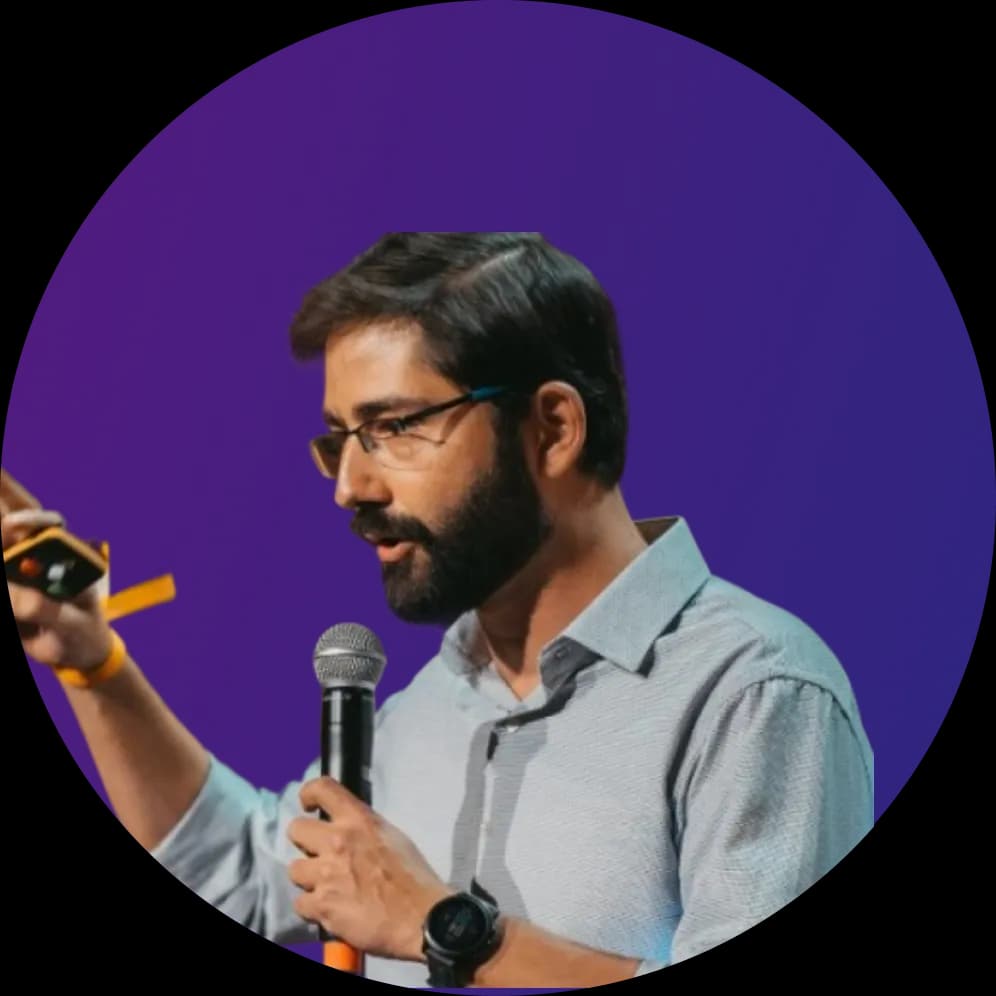
Sahin Secil
CEO & Co-Founder, heybooster
Listen & Subscribe

Episode Summary
Join host Adil Saleh and Sahin Secil, Co-founder and CEO of heybooster, on this episode of the Hyperengage podcast as they explore how heybooster is reshaping ecommerce analytics through custom-built algorithms and actionable insights. Sahin shares his journey from developer to data analyst to founder, revealing how a hands-on consulting background led to the creation of a scalable solution for retail marketing teams. The conversation unpacks heybooster’s focus on medium-sized ecommerce businesses, the critical role of AI in optimizing marketing strategies, and how the platform helps retailers transform data into returning customers. Sahin discusses the company’s lean startup journey, the importance of delivering "aha" moments early in the customer experience, and how agencies are playing a key role in scaling the business. Tune in for insights on building a purpose-driven SaaS product, retaining top talent in a remote-first culture, and leveraging AI for smarter, faster decision-making in the ecommerce space.
| Key Takeaways | Time |
|---|---|
| Introduction | 0:02 |
| Background and Initial Challenges | 1:46 |
| Transition to E-commerce and Data Analytics | 2:55 |
| Focus on Customer Retention and Segmentation | 4:16 |
| Integration and Customer Journey | 5:38 |
| Sales and Customer Success | 7:19 |
| Success Metrics and Market Expansion | 8:49 |
| Impact of AI and Team Dynamics | 9:40 |
| Team Culture and Remote Work | 10:30 |
| Final Thoughts and Future Plans | 16:17 |
Transcript
Sahin Secil 0:02
I think the key is to being a customer centric if you understand what they are looking for, what they need, you can build a really, really great product.
Taylor Kenerson 0:14
Welcome to the hyper engage podcast. We are so happy to have you along our journey. Here we uncover bits of knowledge from some of the greatest minds in tech. We unearth the hows, whys and whats that drive the tech of today. Welcome to the movement.
Adil Saleh 0:34
Hey, greetings, everybody. This is Adil, your hyper engage podcast host, and you know some exciting times that we're into for the last six to eight months, there's so much of AI impacting to different industries we've been exploring industries in the developer Space Industries, in the ed tech industries, in the recruitment space industries, and and the core B to B SAS, data load, like more than 70 products that came on that are core B to B SAS for, for B to B SAS companies. So it's more like technical. So I was thinking that, you know, why not? We just try to explore other industries and how AI is impacting, especially, you know, in the E commerce. So today we have the co founder and CEO of Hey booster. It's, it's aI powered analytics platform for for retail like, specifically, e Commerce Industry. So we have signed who's the CEO and co founder himself. Thank you very much. Saying for taking the
Sahin Secil 1:30
time. Hi, Adil. Thank you for having you know,
Adil Saleh 1:32
looking through different platforms that have, that have had a huge role in in shaping the analytic space for E commerce. They're not as many as they are in the in the other B to B Tech, but you know, there are some big players. So I see that you started back in 2019 with with a bunch of folks that you know that are so passionate about this idea, and you have this prior experience that is more in the web analytics space. How did all this come along at the beginning for you and your co founders, when you started back in 2019 and how big of a problem is? It is now compared to what it was back in 2019
Sahin Secil 2:13
10 years ago, the problem wasn't as big as it's today. I was working as a data analyst, providing consulting services, and there were only a few marketing platforms to manage. It was much, much more manageable compared to today, and marketing teams had enough time to run analysis in manually. But then the number of marketing platforms started to grow, Google, meta, tik, Tok, Twitter, so measurement challenge also became more common at that point, we realized that building an analysis platform could be a great solution to help marketing teams analyze faster with higher quality. Four years ago, we started developing a booster to automate e commerce analysis for marketing teams, and
Adil Saleh 2:56
as you mentioned that having your background with data analytics. And how do you jump into E commerce all of a sudden? And of course, data has been, it's been a very under leveraged problem and underrated, you know, component of any B to B SAS business, or any digital business. So what give you an intuition and motivation to, you know, going to e commerce and specifically building a product like hey booster.
Sahin Secil 3:24
I started my career as a developer about 15 years ago. I was building an e commerce website, but Shopify wasn't popular yet, and the main challenge at that time was customer acquisition. So I began studying Google ads and SEO. Then Facebook entered our lives. After a few years, I figured out how I can acquire customer. However, I realized a new problem. Acquired customer. It became very, very expensive. To be successful, you need to optimize your entire marketing operation. That's why I started diving into Google Analytics. In a nutshell, when I first started my career, I had no clear idea where it will play, it perfect. And
Adil Saleh 4:06
I was like, while I was looking at your product, and of course, the industry, a bit of knowledge that I have, I was thinking that the biggest problem is not like acquiring the customer the first time it's it's basically making them as returning customers in E commerce. And there's not a lot of technology data at scale that enables you as a retail business to make sure you keep on having returning customers, or retaining those customers and getting increasing the lifetime value of those customers after this shop the first time. So what do you think about this? What's your viewpoint,
Sahin Secil 4:39
turning a customer into loyal one is a tough journey. You need to focus on your marketing data even more than your competitors. Our customers are dropping off in your marketing funnel. Which companies deserve more market budget? Which products you should promote more acquisition is just first step to scale your business. You need to monitor the entire. Customer journey and continuously uncover the opportunities in your marketing data interesting
Adil Saleh 5:05
and what kind of customer segments I know that there, there's like different category of E commerce and retail businesses. So any specific segment are you guys targeting, or it's just one solution fits all.
Sahin Secil 5:17
We focus on medium sized e commerce business that are investing in Google or social media, most of them don't have a dedicated team, not easy access to data, analyzed services. They struggle to optimize their marketing performance. Thanks. But the good things today, once they start using cablester, they can quickly see the areas of improvement through the list of actionable suggestions.
Adil Saleh 5:39
Okay? And that also includes, you know, almost every mid size e commerce business, they have a marketing span for search and TPC and for Google Merchant shops and Tiktok Instagram shops. So your your platform integrates with all of these platforms. You
Sahin Secil 5:56
can integrate marketing platforms like Google ads, meta Merchant Center, Search Console, adjust crypto and many, many more.
Adil Saleh 6:04
Okay, so it depends, depends on, on the on the marketing span, and, of course, the deep level of integration that they have across these platforms to be able to leverage a booster, a booster,
Sahin Secil 6:17
get through all your marketing data in one place, which means that once you connect your account, you will able to be around cross marketing platform analysis. For example, you can get a product cross analysis by combining data from meta ads, Google ads and Google Analytics. In this way, you can analyze more deeper compared to model progress
Adil Saleh 6:38
interesting and if, if I, if I talk about your, let's say, how does the customer journey look like? How you guys on board like, what is the best practice that you have while you know, setting up an account for for these e commerce websites, e commerce businesses, how is, how's the customer journey look like? Then we'll talk more about how you're leveraging data for you on customer success, which this podcast is
Sahin Secil 7:03
all about. We directly reach out to e commerce, marketing teams. I know it doesn't sound very sexy, but it still works. We send a cold email and start the conversation and close the deal to think that if they are looking for analyzer, solution, able, store is a great place to start, and we offer them a free POC. That's how they can easily see, hey, booster in an action and it's built the trust.
Adil Saleh 7:27
And then you have, like, your post sales managers, like implementation managers, or just customer success managers, like, how is the journey posted
Sahin Secil 7:36
right now, we don't have a dedicated sales team, because as a startup, our team is very small, which means we have to handle everything with limited resources. If a customer needs help, anyone on the team can jump in and take care of it. Okay,
Adil Saleh 7:51
okay, that makes sense. I mean, of course you gotta make sure you do more with less. With this AI, you don't have to over hire and, you know, and over by the technology as well, like text guest stack and all so you have, like, regular product analytics tool that you use to track your product usage for all the customers, and then a CRM or a chat platform that does all the chat support. Is it right
Sahin Secil 8:13
for sales? We used exile for a long, long time before switching to HubSpot. But now, to be honest, I'm looking for a better options. On the other hand, for product analysis, we are using amplitude, which I highly recommend.
Adil Saleh 8:26
Okay, so for us, for a successful onboard, a successfully onboarded mid sized e commerce business, what are what kind of success metrics and that you have in the first three minutes, like you're you're really looking up like, like this, they need to take, like these kind of steps. So we can map a this customers really of potential. We can either expand them and this is or this customer is going to retail for sure, for an annual contract or something. Is there anything that that you have standardized when it comes to success metrics, from onboarding to
Sahin Secil 8:55
product adoption, we are looking for daily activities for the first week. How many insights they are looking for how many of them are bookmarked and which analyzes they share with their marketing team. These are our indicators give an idea about our customer. Our job is to make easier them to get more action during the onboarding progress. Okay,
Adil Saleh 9:14
and is this globally, or is this within you know your your region, like Middle East or European
Sahin Secil 9:22
region. Right now we are getting leads from English speaking countries all around the world, but UK, US, Canada, our top three markets.
Adil Saleh 9:31
A lot has changed. How, by the way, how AI is impacted technology wise. Internally, you're, of course, individually, a lot of team members there, of course, their work and productivity has been boosted. But when it comes to technology engineering, making efficient solution that in less time, doing more with less, how do you see it panning out? For you?
Sahin Secil 9:55
I'm really excited about the future. Is helping us generate more outcomes with this. Multi we can deliver more project within a shortened amount of time.
Adil Saleh 10:05
Likewise, likewise, we are also, So how big is your team at this moment? I know you're for about four years in, and you're like between like 20 to 50 people right now we are a team of 13, oh, very, strong team and very good employee retention. Yeah, well, what's your what's your take on retaining the talent? These are these founders. They are having real challenges with retain the talent, because there's so many opportunities, so much of has opened up so many, so many things for people to upgrade their skills, and that enables them to, you know, go and tap into different markets. And, of course, the remote culture has has grown so swiftly. Said, like, it's so hard to retain really good talent. So you've done it for good, like, four years now. You said, like, did I hear this? Right? You have around more than 15 people that are been there for almost from the beginning, is
Sahin Secil 11:02
growing, which means we are facing new challenges every week, and so we are learning a new cool things all the time. So that's make us excited.
Adil Saleh 11:12
Yeah. So do you have, like, any kind of culture the team across the team what? What kind of activities that you have to keep up the team members motivated and pretty much bought in, excited for what you're building as a product, as a business.
Sahin Secil 11:30
I don't know, I don't have exact answer, but we are good friends, and we have the same patients, even though in a tough station, we managed to have fun together. I think this is the good thing to bring us together.
Adil Saleh 11:42
Okay, so all of your team is inside the Israeli like Tallinn, I know it's pretty big in tech. A lot of lot of really good B to B sales companies are born from their goal is one, one of the biggest names. So all the entire team is from Tallinn. Do you have an office there?
Sahin Secil 11:58
We have an office in Turkey, and most of our teams lives there. Only me and my co founder are based in Tallinn,
Adil Saleh 12:05
so I'm big about about talina. First, really good news about Estonian technology, their startup ecosystem. You know that about three years ago, one of my friend he is, he's living there, and they he's now registering his own business. There's an E commerce. There is also an E commerce. So that's great. So how is this everything in Thailand, when it's
Sahin Secil 12:30
a long listivity Front environment, there are favorite distractions, so you can really focus on growing your business.
Adil Saleh 12:36
And what about the temperature in winters?
Sahin Secil 12:40
In winter, it's mostly minus. You can go outside without tracing warmer.
Adil Saleh 12:44
Okay, yeah, my school friend, it's, he's a great mechanical engineer, and he's done mechatronics. He's working for a company out of Tallinn that does autonomous vehicles for warfare, all of this. So there's, you know, of course, they're, they're also a startup. For the last three years, they're still seeking funds and all. But again, thing is, there's one thing that that keeps an Asian origin guy away from from countries like North countries, is the temperature, like, it's freezing cold.
Sahin Secil 13:20
But there are also great things like Salas or hot tubs.
Adil Saleh 13:24
You spend 6767, to eight months. You get used to it, and you get a long time. It's just about getting the right. Eventually, it's just about having a look alike. Audiences look like people like yourself, like you tell like there's very much close Net community, doing and playing and fishing in the same water, and there is very least amount of distraction, as opposed to in the Silicon Valley, like everybody's going in the race. And you look at the internet and you seem like, like you're doing nothing, you're you're absolutely killing yourself. So lot of times it gives you depression, yeah? So cutting the noise and making sure that you cut out the network and make sure it keeps you laser focused to what you're building next. Yeah, good to hear from from this. And you guys are like two co founders. You're an CTO that is an external or that is also part of the call.
Sahin Secil 14:20
There are two co founders. I'm responsible for sales and marketing, while my co founder is still need product development. My main channels are understand the marketing dynamics and her challenges are staying to customer centric and deeply understand our customers top problems
Adil Saleh 14:34
a customer centric approach, and that needs to have a balance of what to prioritize, what not to and make sure you know CEO, a lot of kind of this role becomes so tricky because you are the chief executive, and your responsibility to keep the business going. And that is a very, very challenging spot to be in, because a lot of things that you can do to keep business going at the. Different stages of the business throughout, like in good and bad times, a lot of times. I mean, you have to have different heads, you know, when it comes to sales, when it comes to product, when it comes to scaling the team, hiring the right talent, getting more sales. So I appreciate that. Now, it's not easy to be a CEO and alongside the co founder of a startup. Yes, it's super hard to build the right product. It's almost commoditized, like everybody can build the product. But having the right problems, navigating through the right problems, basically attract these engineers and CTOs, because once they get Hey, this is a big enough problem. You know, whatever it takes. I'll find a solution. I'll I'll find an implementation route for this, and engineering infrastructure for this. And that's going to be exciting. It's going to be tough, but exciting. So it's good to have this is what like I keep on. I spoke to the founder of Sasser, Jason Lemkin, when I was in London. So I met a lot of Turkish friends there too. Usman is a good Turkish friend of ours. We met there in London too. He's the founder of, I guess, user something, user this platform out of Turkey. So we went together. And, you know, we asked him, like, what is that one thing that we gotta do? Like, he asked about my team at CTO. He said, make sure you have a right CTO, because building a product, everything starts with the product and raising funds is going to be harder and harder in the coming, coming months and quarters. So this, I mean, this is about eight months back. Now it's happening because I know that we need to build the right product. I'm also a B to B SaaS company. It's, it's a data analytics for customer success, sort of CO agents that we're building, like, it's more like agent of AI, but we're training our own agents. So that's why we're doing like, user interviews. And, you know, we're also connecting with some leaders to help us with some processes. So we can train our CO pilots in the way that we can, we can, we can we can make an impactful product, and it's about, it's about building the right product. I agree, perfect. So now one last thing before I set your free side. Now, what is one thing that makes you excited for your business, like, business wise, this year, going into this year, 2020, 2025,
Sahin Secil 17:21
seeing our customer base increase, active user increase, and the average time spent on the product is increased. So building something in real is truly excites us.
Adil Saleh 17:33
You gotta make sure that you're never at your best, and you're always choosing the best version of yourself, and you're always striving to do better, to make a better impact, build a better business, better product, better engineering and all. Yeah. I mean, it was really nice chatting with you and having you on this podcast. It was so good to know about some startups out of that region, as well as some technologies that are playing in the market, and then not trying to just ride the wave of AI and B to B SaaS and, you know, just trying to solve the problems of and living closer to the customer. So I really appreciate your time, and I enjoyed this, this meeting, and this, this entire episode, thoroughly.
Sahin Secil 18:14
Thanks. Thanks a lot. Thanks for having me.
Adil Saleh 18:18
Thank you so very much for staying with us on the episode. Please share your feedback at adil@hyperengage.io, we definitely need it. We will see you next time and another guest on the stage with some concrete tips on how to operate better as a Customer Success leader and how you can empower engagements with some building some meaningful relationships. We qualify people for the episode, just to make sure we bring the value to the listeners. Do reach us out if you want to refer any CS leader until next time. Goodbye and have a good rest of your day. You.
Meet ORA — Your AI Agent for Customer Management
ORA by Hyperengage prepares your calls, tracks account health, and surfaces signals — so your team can focus on building relationships, not chasing data.
See ORA in ActionListen on
Keep listening
Meet ORA — Your AI Agent for Customer Management
ORA by Hyperengage prepares your calls, tracks account health, and surfaces signals — so your team can focus on building relationships, not chasing data.
See ORA in ActionListen on