Episode No:194
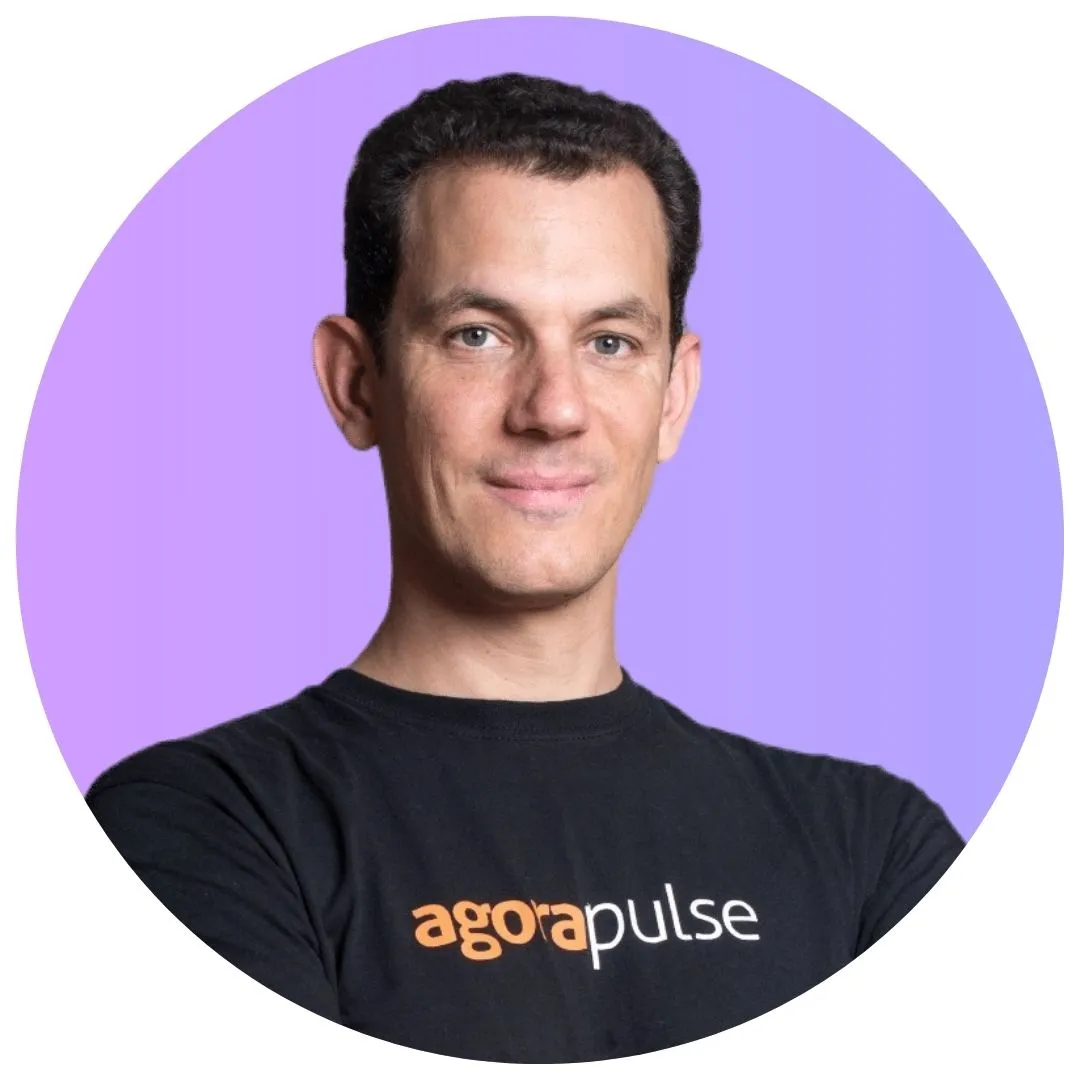
Ep # 194: How to Know Within Fifteen Minutes If Your Product Will Convert ft: Emeric Ernoult (Founder, Agorapulse)
Emeric Ernoult
Founder, Agorapulse
Listen & Subscribe

Episode Summary
In this episode of Across The Funnel, Adil Saleh sits down with Emeric Ernoult, Founder of Agorapulse, to explore why social media remains the hardest channel to win but the only one where an audience compounds. Emeric traces the shift from broadcast media to hyper-targeted social platforms and argues visibility plus engagement are the only two numbers worth tracking. He unpacks Archie, Agorapulse's new AI product that turns a single conversation into a month of platform-ready content, and explains why AI video avatars still fall short on energy and rhythm. The conversation closes on two operating lessons from Agorapulse's own growth: cutting headcount 30% without slowing down, and doubling paid conversion overnight by replacing custom pricing with three simple flat plans.
| Key Takeaways | Time |
|---|---|
| Audience growth and engagement are the only two metrics | 12:09 |
| Killed a zero-engagement video format in August | 12:09 |
| Social built his book's audience better than any channel | 07:00 |
| Nano Banana finally made AI visuals good enough | 21:03 |
| Archie turns one conversation into ready-to-post topics | 24:49 |
| ElevenLabs voice clone stable, still lacks on-camera energy | 25:17 |
| Cut team from 185 to 130, about 30% | 41:32 |
| Three flat pricing plans doubled paid conversion overnight | 47:03 |
Transcript
Emeric Ernoult 00:00
If they don't know your product exists because they don't know you exist, there's no point. So you need to build visibility, and then you need to build a pipeline.
Introoanna Onasi 00:14
Welcome to Across the Funnel, where we dig into concrete go-to-market moves across sales, customer success, and account management, so you can build revenue that lasts. Brought to you by Hyperengage and Dextego.
Adil Saleh 00:33
Hey, greetings everybody! This is Across the Funnel Podcast. I know that this is in the past. I would say quarter or two, we've been bringing some unique stories, bringing founders and products from all over the place. Not just like keeping it to North America, not just keeping it to like core subscription-based B2B SaaS in you know core like SaaS selling SaaS or GTM selling GTM. We're trying to explore more categories, trying to get on platforms that are doing it at scale when it comes to GTM because how I measure scale is not just like serving like some X amount of customers at scale or for you know at a bigger scale, but it's all about the the longer term window on on on the infrastructure, on the product, on the on the industry vertical, and on the GTM size in in all functions. So that's why we we're gonna be talking about social media. We're gonna be talking about social listening. How big of a shift it has taken on it in the past few quarters, ever since like these newly super, I would say, generative AI models that have come and that has impacted the the way people write, perceive, consume, interact with content on social media, and that's that's all about it. Today we're going to talking talking to the founder of Agorapulse, Emeric. Been there for almost two decades, close to two decades, and one of the one of the bigger fish started from here, Silicon Valley, back in the years, and we're super excited to have you, Emeric. Thank you very much for your time.
Emeric Ernoult 02:08
You're welcome. Super excited to be here as well.
Adil Saleh 02:12
Love it. So now, tell me a little bit about like you know your transition. I I know like it's it's not it's not super relevant to talk about the times like 2010, 2011, when like this big boom of social media management tooling, social listening tooling came in, and there was this big bubble. Like for the first time, people or like big brands, social media teams or agencies started to create and disperse content from one place, from one platform, and now there's load more platform, a bigger challenge when it comes to content distribution, measuring ROI from from the content. If we keep like B2B SaaS, and how do you see in the past 15 years this social media thing? Like keeping is it keeping up with this right of AI, or is this just being less bloated as it was before? Or a lot of these growth or social media teams like internally not thinking so much of ROI out of social media. How do you see this entire shift as a founder yourself?
Emeric Ernoult 03:14
Yeah, that's a good question. But first of all, it's always a good thing to go back to first, you know, first principles. Like this, the simpler you can get to. When you get to the most simple way to look at the world of marketing and media before social media, what you what did you have? Radio, TV, and print media, right? That's what you had. Maybe maybe movies, but like movies were probably super super small in that world. A part that's all you had. If you were if you were an individual wanted to consume, you know, you had an hour to waste in in a line waiting for something. What would you do? Read a journal, read a newspaper, right? Read a magazine. That's what you would do. You you wouldn't watch TV because you didn't have their device in 1995 or whatever. And what happened is slowly the web digitalized all of that, so it became the print media, the TV, and the radio. They became available online through through laptops and and and then and and soon phones. And and then what what what happened next is that social media got in the game and disrupted all of this because now, when you have an hour to wait, because you're in line somewhere, what are you going to do? You're going to look at TikTok or Instagram or whatever. You're probably not going to read a printed newspaper, right? So that's what social media has been to the world of attention capture. Like, how do you capture attention when you when you're a business and you want to reach people, and and how do you entertain yourself when you're an individual? So basically, what it is, it's a channel between people who want to be entertained and look at things and check things and watch movies and read the news and all these all these kind of stuff, and businesses who want to be viewed by them, be seen by them, and be. Discovered by them, so before online, all you had is big fucking ads. Like that's all you had, like big ads on TV, big ads on radio, big ads on the street, and big ads. So lots of budget and and and quite hard to do, you know, like micro marketing or a marketing that could fit into a $10,000 a month kind of budget, or even 5k a month budget. With online, we we opened this advertising market to lower budget, more people, more SMBs, VSMBs, and so on and so forth. With social media, we went super deep in the micro, micro, micro. Now I can target you on LinkedIn almost on social. So, and what he did that was impossible in the old world is that it allowed you to be your own media, produce your own video channel, you know, series or podcast, like you're doing now. So all these things made this relationship between the consumers, you and I, as individuals, and the businesses who want to reach us, much more complex. We're not going to lie; it's much more complex. Like TV, radio, and and and and road signs in the 80s, they were they were simple. Now it's much more complex. So that's the that's the long the the long story of media, you know, compressed into five minutes. Now, what we are all trying to do when we're businesses is we're trying to be, we're trying to capture attention of our audiences and and potential audiences through social media, mostly today. Because what else do we have? Email, phone, paid advertising. Of course, we already mentioned that, which now has multiple forums and is is is much more complex than it was 20 years ago. And what else do we have? We have maybe we have events like physical stuff, events. You know, yeah,
Adil Saleh 06:56
in person events,
Emeric Ernoult 06:57
in person events, and then social, and then social media, like, and at the end of the day, when you're a business and you think about how am I going to capture and build my visibility, i.e. my audience, people who know about me, and consume what I produce, and check me out, and are interested by me, social media remains the best platform, not the easiest, but the best. Because if you're just going email, well, you first got to capture emails. It's not easy. People don't give give away their email because you're you look cool, right? They give away their email because there's value for them. So you got to start with the value. Same with social. Paid is very expensive. It's not easy either, but and on top of not being easy, it's very expensive. And real life events-they are very complex. You have to fly people in, book a hotel, get a booth, whatever. It's it's hard. So at the end of the day, when you look at all the ways we have as businesses to get to be known to be seen, social, despite not being easy, still holds the most potential. Let me tell you a story about this. So I just I published a book in June. So it's my first book. It's a book for about leadership and management for CEOs, and I I looked at all this ecosystem of how can I get my book known? How am I going to make sure that this year of work it took me a year to write the book? It's it's a lot of work. How am I going to make sure that this book that I worked an entire year of my life on is going to be read and is going to have an impact? And I looked at all the channels, and you know what? I didn't see and didn't find any channel better than social media to work on making sure that the work I invested in my book is going to pay dividends by getting the book known and distributed and read. It's not easy. That's a lot of fucking work. I have to do content and videos and short form and long form. I had to learn a ton of stuff, how to promote my own stuff, which is good because I'm learning stuff for Agorapulse, which which I like and I enjoy. But I could not I could not find anything that gave me the possibility to build an audience that compounds over time by being interesting to them and by giving them value, so that they say, "Oh, this guy Emeric is really interesting when he when he talks about leadership and management, and being a CEO. I kind of like what he says. I learn stuff. Let's follow him, and then buy one follower. I say, "Hey, you should follow Emeric. It's great for CEOs. Yeah, you're a CEO too, my friend. Go and and that does not really work with paid. That does not really work with email. That does not really work with cold calling. That does not really work with on offline events. But it works really well on social. So it's a lot of work. But it's the only media where you can actually build a compounding audience. The difficulty is you have to be interesting and you have to share stuff that people. Want to consume because it's helpful to them, which is where the hard part lives, and that's why we build Archie. But we'll get to that.
Adil Saleh 10:07
Yeah, absolutely. I I love this the the the practicality of the whole experience of this social media consumption, and and and this piece which is leaving an omni impact. You know, today, like a year down, or maybe two years from now, when almost three years from now, when there was not so much of intelligent conversational AI or generative AI, the the content was good. But when when these platforms like Copy.ai, these platforms came up. Today, it's more also more about not just about Omni being about more impactful as well, having an impact with all that stories, content, hook, a lot of this, and this has become more and more like a lot of founders are thinking about doing like founder led. A lot of companies came on this podcast are only driven like ROI is driven only by founder led. So there's there's companies that are close to like 100 million, they're just founder-led. A couple of founders and and and they started this generating like like content and creating impact, building stories, and you know captioning people at people and you know massive eyeballs starting on LinkedIn. Now running entire companies and driving revenue. So now the bigger piece is now making impact versus in the past it was more like omni-channel, like one post going on all five channels at once, and you know there's no such creativity or diversity or impact. Now it's it's more about that. Second is is is the I would say the the measurement part, like how you're going to measure like tangible outcomes, like business outcomes. Let's say, for example, Facebook or LinkedIn or TikTok. Apart from some of the analytics that they give, that don't give you any answer. But how you're, you know, managing both of these. First is the not just Omni making more impact and Omni. Second is is is is measurement, like how you can measure end to end from the top line to end bottom line funnel the the business outcomes.
Emeric Ernoult 12:09
Yeah, of course it's very simple. There is two way. There are two ways you can measure impact. The first way is how many people know you. You know how many prospects do you get in, and and and how many of them are are seeing you, and are are are are you you're visible by how many people? That's what you call you call that brand awareness. You call that you know brand coverage. You call many names for that. But it's like, how many people do I touch when I say something, publish something, you know, post something, promote something. That's the audience. The second one, which is more kind of a consequence or a cause of of the others, is how many people engage with me, like like what I say, and you know, like come back and and and and and react to the thing I posted, so this one I look at it more in in with with the intent of this is going to drive more more audience because if people the basically the engagement is is a sign of their interest for what I put out there, and that drives my understanding. Okay, I need to do more this and less of that because this they they like and this they don't like this they react to say yeah yeah amazing I love this this advice I want to do the same thing thank you for sharing and this other stuff like nobody reacts so for me that's a sign that I need to stop doing that stuff so I keep I test that kind of stuff all the time like in August I tested two different types of videos. There's one that got no engagement, zero, and and another one that got good engagement. So I know the zero engagement I'm killing. I'm not going to do anymore. And then, so that's that's all the the awareness, visibility. How many people do know me? And you need that. If nobody knows you exist, your product can be amazing. But who will care if they don't know your product exists because they don't know you exist? There's no point. So you need to build visibility, and then you need to build a pipeline. If you're a PLG product-led growth company, then you need to build free trials and traffic and and and and activation and and then subscription. If you're sales led, you need to build you know traffic and lead lead magnets and demo request and demo held and SQL and SQLs and all these things. But at the end of the day, you you need to build something that says to you that there is an interest for what I sell on the market, and they're telling me, and they are giving me their email, asking me for a meeting, and asking me for more, asking me for information, and so on and so forth. So those are the two things you measure. Am I growing my visibility and my audience? Are more and more and more people exposed to my message? Every month, yes or no, and you know, let's not let's not lie to ourselves. If your audience is not growing, that's not good. That means that either you don't know what interests them, or and and so that what you're putting out there is not interesting to them, solution possibility number one, or you know what what what interests them, but nobody in your company knows how to put it out there. So you're not putting it out there. You know what they would like to consume, and get from you, but nobody is able to produce that. So that you're creating that content and and and and posting it in a way that they are exposed to it, and they say, "Oh yeah, I love, I love you, I love the content you're putting out there. It's one or the other. That's it, and you need to figure this out in order to do that content production that interests people that are your ICP, that are the kind of people you want to attract and produce it, so that more and more people say, "I want more of that. Oh yeah, you should. Are you interested in this? You should follow these guys.
Emeric Ernoult 16:07
They're really good at that, and there are brands I'm following, and I keep recommending to everybody brands or events or people because I say, "Ah, if you're interested by that, follow this guy. It's really good, and what he shares, it's really interesting. I mean that's that's it. Most of us, let's be honest here, most of us are not good at that. Most of us, like I'd say, 90% of companies are not good at that. Period. And my mission in life is like help them getting better, get better at that. So that's not okay. But when you think about the business, you gotta you gotta look at how much traffic did we get? How many demo requests did we get sourcing from social media? How many leads did we get coming from social media? And that you need to measure in a way. What is? And you can measure the traffic that is that is being touched by social media, and you can measure the number of leads that you get on social media. Obviously, on social media, you probably don't want to measure a number of demo requests because I think it's way too down the funnel. It's way too aggressive to go on social and say, "Hey, ask a demo, request a demo, request a demo. I don't think people will want to request a demo, but it's funny. I had a lunch. I had lunch with one of our marketers today, and I told him, "I said, what you want to do on social media. You want to share something interesting that is connected to the problem you solve, but that's not about you. But that's about the problem you solve. That's what you want to share with those people. Let's take us for example. The problem we want to solve with our new product is content creation for social media at scale and high quality. That's the problem we want to solve. The way you can solve that problem is you can do it in multiple ways. One of them is you can use the existing LLMs like ChatGPT and Claude, and in in in a very cheap way. And one thing we could do is say, hey, here's a whole framework that will help you to produce content for 30 days with Claude or with ChatGPT using agents, using the prompts, the tools, the harnesses, the the directions, all the things. And so you can, you want to produce a lot of content for the next 30 days from your existing content on social media, on let's say on LinkedIn, to be very specific, or Instagram, it's really hard. There's visual content, there's carousels. All these things are really hard. You want to do that at scale, high quality, lots of content from your existing content. Here's the whole process you can use yourself for 10 bucks because it's going to cost you 10 bucks of tokens on tokens on on Claude, plus Nano Banana, Gemini, whatever, and you give that to them. So that's value. Oh, that's for free. It's the whole system. I don't have to reinvent the wheel. I love that. Give it to me. You get a lead. Once you get a lead, say, hey, this whole system, it's great. It's free. It's 10 bucks, but it's going to take you 15 hours to implement. You can use our product, which is 49 bucks a month. I don't know. There's no price yet because it's free now. You get these own products, 49 bucks a month. Maybe you want to try that. Oh yeah, interesting. So you don't pitch the product, you don't sell the product in your lead gen in social media. You pitch the solution to their problem, and then once you know they have the problem because they told you so when they downloaded your lead magnet, and you know they're interested in fixing that problem because they downloaded your lead magnet, so you know then you can fit your thing, and that all that you can do on social media, easy. People are doing that all day long, except that 90% of what they're trying to give you is bullshit.
Adil Saleh 19:39
Yeah. So I mean, we've been running this a lot with internally, of course, the companies that I worked at, and of course, this media company across the phone. We almost what like four years down, 200 episodes, more than 200 episodes, and we still are kind of struggling with what content would pop with our audience, and you know who were. Of course, it's it's it's easier to you know identify like hey this is our ICP and these are the people that we would like to follow our page and and and then we figure out hey this is the content and topics we might entrust them and that's how we're gonna drive a lot of these engagement. That's the starting point of any social media. So biggest challenge was to crafting the right stories, although we know what topics, but it's the presentation of it in the past one year because there's so many of founders and products and media companies or or brands are doing it because of AI enablement. There's so much things, so many things that you can do faster. So you talked about you know crafting stories and content that sells more. I've seen some of your your posts, and I know you have this built-in function that gives you the entire content calendar for entire month. Could you tell us more about it? Like anything that we, of course, we're going to be starting using Archie App very soon. So we're thinking about how you guys are trying to tackle this problem with your product and this distinct new capability. Yeah,
Emeric Ernoult 21:03
so the the product name is Archie Archie App. That's the URL, and it's we made it a separate product than Agorapulse because Agorapulse is a traditional social media management software, which is really well tailored for companies that already have an existing social media presence, they're doing well. They have a team. They have an agency. They have many social profiles. So they have they have a lot of complexity, and and and and they need to bring in a solution to manage this complexity. You know, let's be honest. This is not the majority of businesses. This is the kind of businesses we're going after, which usually are a certain size, and and and and have a certain level of revenue and team and so on and so forth. Most businesses they're not there yet. Like they look at social media, say, "Shit, we have to do social media. We have to get better at social media. Social media is like, eh, you know. So we we have to amp it up. But the number one thing, the number one wall that they hit is like I don't know what to do. You know, I don't know. I don't know. I don't have time. I don't have the budget. I don't have the time. I don't have the people. I just ah. So they they're stuck in this place where they look at social media. It could be interesting to as a channel for us, but but I just don't have time, and I I just don't have the the the bandwidth to deal with that, and until AI and and until AI could generate good visuals and even videos, which is recent, that's like it's it no it's less than a year. Nano Banana was like October November 2025. So until then, the visuals were like shit. They really were bad, and and I told the team, there's no way we're going to do content with AI because if it if it cannot do visual like on social media, you can't do visual like please like it's you know text only is not going to be enough. So that's why we started to work on that in November of 2025. So before AI, there was no solution to that problem with AI. The solution we find is we believe is the right solution is that you and I we already have a ton of interesting things to share. The problem is not being interesting. We are you are interesting. I am interesting. I do a ton of stuff that's super interesting for a lot of people to learn from. I just do not have the time to repackage that stuff in a format that's going to be a good fit for social media and for social posts, for social content. That is the problem I'm trying to solve. Like, let me give you a very simple example. This conversation you and I are having now. You know where it's going next. It's going next to Archie, and I'm going to say, Archie, I just have a one-hour conversation with Adil about social media and marketing and like and all these things. Can you extract topics from this conversation that is going to be interesting for my audience? Because you know who my audience is because I've already told it, and and it's define you know the the avatar we're talking to the competition we have the kind the tone of voice the kind of stuff we like to share, and I'm guaranteeing you it's gonna it's gonna give me 345 topics and then it's gonna give me angles, and then I'm gonna use a conversation you and I just had. I didn't have to work on this conversation. It's just it's it's me being interesting right now. Like it's the stuff I know. It's the stuff I've been working on for the past 20 years. It's there. It's just not packaged for going on LinkedIn in a way that's LinkedIn optimized. It's not packaged for going on Instagram in a way that's Instagram optimized or Facebook or X or whatever. So the whole name of the game, in my opinion, is that we can turn this conversation into interesting social content, and I'm I'm taking this conversation as an example because it's easy to relate. You just heard everything I said. Yeah, that would be a good LinkedIn post, and this too, and that too.
Emeric Ernoult 24:49
So you can see that, but but actually producing that is a pain in the butt that nobody does, and that's the problem we're going to solve. And the next step next step is. Obviously, I talked about visual. There will be video involved. I think at some point in a year, 18 months, 24 months-I don't know when-but I'm going to have my avatar. That's going to be me on social media in video. Yeah, you know. Yeah.
Adil Saleh 25:15
Have you tried HeyGen?
Emeric Ernoult 25:17
I did. I did. But it's not good enough. I did, but it's not good enough. I tried one from ElevenLabs yesterday. I tried it yesterday. The problem with HeyGen is that my voice was distorted and it was not stable. ElevenLabs is much more stable. My voice on ElevenLabs. I did my whole audio book with ElevenLabs. It's perfect. I I make you listen to it. You're gonna say Emeric. It's you. No, it's not me. It's my Mac.
Adil Saleh 25:42
That's true.
Emeric Ernoult 25:42
It's really, really good. A lot of work. I spent 70 hours to optimize the AI voice. It's not. It's not. It's not set. It's not press a button and you're done. I had to regenerate half of the book. I had to retrain it on certain words that it could not. It could not pronounce right. So, cloning your voice is already a lot of work and it's hard to do. Now, when I did the clone with HeyGen, the voice was not stable. When I did the clone with ElevenLabs, the voice was stable, but it was very like this. Hey, Adil, I'm going to talk to you about Orb. You don't want to be like you don't want to sound like that on social. listen to the energy I'm putting in this thing right now, Adil, this is amazing. You should try that. It it it could not do that. So I say, well, so that's not ready for social. So that's not ready for the kind of energy, entertainment, you know, rhythm, pause, deep, strong gesture, all that kind of stuff, which is very important for videos. Not ready for that. So for me right now, it's really text and visuals. Video works. Text and visuals.
Adil Saleh 26:46
This new platform pretty much there for beta for like anybody to just sign up and start using?
Emeric Ernoult 26:52
It opens a month ago. It's still like it's V 0.5. It's still it's still very early days, and basically every two weeks, we're adding a major new feature. The next one is we're revamping entirely the the visual production, which is it's going to be amazing. You're going to have like a mini Canva inside every post where you can really and you can give it your your your brand guidelines, your your your design guidelines. So it's going to create design that's very very consistent, which is the hardest thing to do with Nano Banana, for example. The next iteration is we're going to help you get sourcing and ideation from external sources. So, like I have you heard about Alex Hormozi? Does that ring a bell?
Adil Saleh 27:34
Yes, yes, yes.
Emeric Ernoult 27:36
I know Alex pretty well. He's coached me for an entire year, and I I I learn how Alex does social and content on social and how his media team works. I I'm also friend with Dan Martell, who also has a social media team of 1516 people. So I know how these guys work. They have, they basically have a team that scouts the web and social and to grab ideas, to ideate, to source, and they also follow them. That's why I said this conversation is going to Archie because they follow them. They follow every call, every training, everything they do now. And the trends as well, and the trends. Yes, and they translate that. Oh, that here's a here's a topic, Alex. Here's a topic. That was so funny. I was in in Vegas in his office for an entire Sunday in in back in January, and at the end of the day, we were talking about content creation. And at the end, and his team, his media team was in the room the whole day. And at the end of the day, it turns to the media team and say, "Hey guys, how many topics do we have for today? And they said, "Oh, we had this, we had this, we had that. And I was like, "Fuck this! Everything we discussed today is going to be a video on YouTube by Alex because because they capture that, and then they said, and then they extract all the all those topics, and then they're going to work on the topic. They're going to build the context around the topic, and he's going to create the content based on what his team captured from him and enriched, and then gave it back, give back to him. So we want to build that as well. So if you are following an and you know a media, a blog, an influencer that you think, oh, I like that. I could have said that. Well, then now you can. But like, just get the content, turn it into something that sounds like you, and and produce it for social. And then the next, the next step will be lead gen. So, I don't know if you know. I don't know if you've have you have you already tried to capture leads on social media. Have you already done that?
Adil Saleh 29:21
Just done for for the podcast. Like we find interesting people, we source it using AI. Like, hey, America, this guy is sharing interesting topic from Agorapulse. Go reach him out with this prompt, maybe this message, and then that's how we like. You can call it lead, but not for like sales.
Emeric Ernoult 29:38
Yeah, because there are a lot of people who do lead gen on social, they say, "Hey, I have, you know, you want my prompt for X, Y, Z on Claude? Comment this, and I'll send it to you, or put it in the comment. Yeah, I mean, there's a lot of people doing on LinkedIn as well. We'll send you
Adil Saleh 29:53
an entire PDF and everything. Just type this.
Emeric Ernoult 29:57
That is really, really complicated. It's really really complex to do because on some social networks you can put the link in the post. On some social networks you can put the link in the post, but you shouldn't because it it hurts your reach or whatever. You should put you should people say people want to put the link in the comment. On some social network you can ask for people to put a word a keyword in the comment based on that, you automatically DM them, and then you say, "Yeah, I want to, and then you say, "Give me your email.”
“Give me your phone” then you capture, and then you send them the lead magnet. And on some others, like TikTok, you cannot do any of that. You have to say, "Hey, it's in my bio. Go check in my bio. Blah blah blah. So, depending on the network, depending on the content format, it's all different. It's it's it's in different shape and form every single time. It's an it's a nightmare to do that at scale across social media. So basically, we want we want that's the nightmare we want to solve. Like you're gonna you're gonna come to Archie and say, Hey, Archie, I want to promote this podcast episode, and you know I'm gonna I want to do it on Instagram, on TikTok, on YouTube, on Facebook, on on everything, on LinkedIn, on everything. It's gonna say, okay, you want people to just go and check the episode, and yeah, no, without no email, nothing, just traffic, just yeah, yeah, that's it. Okay, cool. And it's gonna send them everywhere via the link in the profile, via the comment in the DM, the the the link in the comment via hey you want to see the full episode comment this and I'll send you the link, all these things and it's going to do that automatically across all those different networks, whatever their system and how they work. So that's the the the and that connects to the conversation we were having 15 minutes ago. How do you measure business impact? And that's how you do it. You do it through lead gen, because lead gen, especially in B2B, I'm meeting B2B, you're in B2B, we know B2B. In B2B, the first step of of a business is a lead. A first step of business is someone raising their hand and saying, "I like what you do, I tell me more.
Adil Saleh 32:03
You need to capture the intent. Yeah,
Emeric Ernoult 32:04
yeah. You're not gonna you're not gonna get demo requests and entry trials directly from social media from people who never heard about you. From what you're gonna get is that from word of mouth. But word of mouth you have to create. Word of mouth does not start from any from nothing. So that's something you have to engineer basically.
Adil Saleh 32:21
Perfect. So if we talk about the go-to-market, like the post-sale side of things at Agorapulse, I know that you have pretty much fine grind onboarding to you know expansion process. So, how you're measuring success around it? Like, what kind of success metrics are you guys tracking? You guys have CSM account managers for bigger accounts. Like, how is the entire formation of teams?
Emeric Ernoult 32:42
How do we track success? Well, you track success at the end of the day. We've MRR generated at the end of the month and growth of the MRR,
Adil Saleh 32:49
like the the product usage and consumption and in app like actions that you want to like post. I would say post sign up to activation and adoption because it's
Emeric Ernoult 33:00
still a bigger. Different. It's very different if you talk PLG or if you talk sales led. If you talk sales led, product adoption doesn't matter. What matters? Do we do they want this feature? Oh, we're losing deals because we don't have this feature. So you have to build the feature to not lose the deal. Are they going to use the feature? You don't give a crap because if you just want to close the deal, and apparently if you don't have feature X, the dealer going to compete the competition because they have feature X. So, the way you measure success for a PLG motion or a sales-led motion is entirely different. Now you're you're going to argue, or if they don't use the feature, they're going to churn, which is right. So you need you also want to you also want them to use features that are used. Yeah, I
Adil Saleh 33:39
mean product adoption is still a challenge for both, right? Both motion. Sometimes it's harder for them to get the right maybe knowledge or training or like I'm just talking about signing up. Be it like product led. Like if that is a product led motion, it could be a bigger count down the road. You never know. You are you know a growth manager for multi-million dollar company has just signed up to check in, but you still need to activate that that that account for them to you know see the value. So how fast did that route from onboarding to you know trying to deliver in the first impact? When we spoke to you know platforms similar like social media management platforms, they were like more like, hey, we want to make sure that they connect their social media in the first place. They integrate all the like APIs and everything, and they they're good to you know schedule content. They start discovering content, start adding content. So, what kind of those actions that are indicating success during the post like kickoff to adoption stage.
Emeric Ernoult 34:41
Yeah, if you're PLG, all all you've said is right. You want them to give you their email, their company, and connect their profile and start either responding to a message or a comment or deleting a comment. Like I think some kind of an action of an incoming content. Yeah, and and start creating a post. And check a report, like we're going to look at those things. But when you're sales led, let me let me let me let me share that with you. When you're sales led, the person who's trying the starting the trial, one 50% of the time they don't have access to the profiles. They're an intern that someone asked to go and do go do a review all the social media tools, and they have no access to any of the profiles because they're an intern, and they get into a Agorapulse and they sign up and they have a Nike email. That true story. We've had that in the past, and then nothing happens. Is this a you know? If you're a sales lead, you call the guy say, "Hey, Nike guy, oh yeah, but I don't have access to the. Okay, you want me to give you access to a fake account so you can try? Oh yeah, sure. I want to. So when you're sales led, it's it's different, and it's it's worse than that. When you're sales led, I think 50% of what we sell comes through RFPs, requests for proposal. These guys, before they select you for step two of the RFP, they don't want you even touch your product, so you're you're not even going to have product utilization until step two or three of the RFP. If you are if you've been selected to get there, so that's that's very different. So if we talk only about PLG, yeah, you you you basically want people to feel like wow in the first ideally five minutes. Ideally five minutes, and you know you can extend that to seven or eight minutes. But as soon as it's more than 15 minutes, if there's no wow within 15 minutes, you're done. Like the person's out, and you're gonna never gonna see them again. So how do do how you get the wow will depend on many many different things. If they came with a specific intent, looking for something, that's that's them seeing that something that's gonna be the wow. But if they came out of curiosity, oh, I heard about Archie Emeric on a podcast. What they're trying to solve sounds interesting to me, but I don't really have a problem right now. Then the wow has to be about something that most people will be wowed by. Like remember the first time you got to the first very first time you got to ChatGPT and you ask something and you put something in and then a reply to you. You felt wow, right? You're like wow, that's crazy. Look at that! This thing is alive. So that's that's the kind of experience. I remember the first time we experienced Intercom in the in the when was that 2014?
Adil Saleh 37:32
Yeah, 2013 14.
Emeric Ernoult 37:34
something like that. Like a yeah, yeah, late late early 20 teens. I remember looking at Intercom and and and and putting the JavaScript on our on our app and suddenly seeing people popping in. Oh, look a user! Oh, another user! Oh, I can talk to them! And it was a complete wow! Like wow! I can talk to my users. I can see in real time what they're doing in my app. So today it's not novelty anymore. Intercom even moved to full AI support. They got bought by Salesforce. The world has changed in 13 years a lot, which, by the way, is a sign that we all have to change all the time. So get ready for more change. Yes,
Adil Saleh 38:15
yes, we get more receptive to change. Yeah,
Emeric Ernoult 38:18
but that's that's what you're trying to go for. This wow, this oh wow, that's that's cool. If you cannot trigger that, that's it's not going to work. And for a lot of people, obviously, the more you do that, faster for a lot of people, the bigger your company is going to be. So obviously, not all company are going to be ChatGPT. You don't have to. So sometimes your wow is a small wow for a small subsection of a small industry, and that's okay as long as you know exactly who you're working for and and who you're getting the wow from.
Adil Saleh 38:49
So there's a big vertical that has been there for almost a decade now, and now it seems like it is like it is kind of being more stagnant instead of growing. That was the agency vertical. A lot of social media agencies. Prior to this, they were like they had like clients. They they used to have all the approval system inside the app. You know, inside Google calls. How do you see this category expanding at this moment? What is the potential level?
Emeric Ernoult 39:16
Agencies? You mean?
Adil Saleh 39:18
Yeah, agencies. Yes, social media agencies, branding agencies use.
Emeric Ernoult 39:22
I mean, right now with AI, they're multiplied. Like their power is multiplied. They can do 10x more with the same headcount and the same and for the same money. So I I don't see agencies going anywhere right now. I see agencies just doing more for the same amount of for the same budget, but just being more effective, delivering more value to their customers, and getting less stress because they can do so much more and get and get get get money and convince customers that what they do is valuable and and bring value to them. So I I'm I'm quite bullish on on agencies and service providers. It's interesting. I don't know if you heard that, but OpenAI and Anthropic are building huge agencies. They're nearly humongous service businesses for what to help people leverage their technology. So they understood one thing: is that technology alone cannot be understood and leveraged by organizations and human beings without a little bit of help, and that's that's why I think agencies are going to be very very useful for the foreseeable future.
Adil Saleh 40:34
Okay, perfect. And I see that your partner's program for agencies as well. How does that work? Can you expand a bit more on this?
Emeric Ernoult 40:39
Yeah, it's we're basically paying them a big fat fee for the customers that they bring, and so they can provide their service using our product. But they're also getting a cut of the of the revenue that we make through that. So, it's it's kind of a affiliate on in steroids, basically.
Adil Saleh 40:59
Okay, affiliates of steroids. I love that term. Perfect. So now thinking about you know the team bandwidth. Everybody's talking about do more with less these days with AI and how big is this team now at Agorapulse? And of course that has been overlapped by Archie. With you mentioned that it's a different different product, but of course, might have the same team overlapping. How big is the team, and how like you guys are you know thinking of expanding the team or maybe optimizing the operations?
Emeric Ernoult 41:32
Yeah, the team is 130 people right now, but it used to be 185. So the team is the team is has shrunk as reduced, almost 30%. And but honestly, it was it was too many. 185 was way too many. I I I got carried away by a lot of different things. I'm not going to get into. And we got to a point where we had too many people. So that happens to a lot of companies, a lot of leaders, we make mistakes. We hire in the wrong direction, in the wrong departments. We hire too much, and we got carried away. I, my belief is that with AI, you can do more with the same amount of people, or you can do the same with fewer people. I believe the future belongs to a world where we're all going to do more with the same amount of people. So I don't think, I don't think companies are going to shrink headcount. I think headcount are going to keep are going to stay the same or grow as long as the company can grow because it can do more with the people they have. I think. So by
Adil Saleh 42:38
that mean by by that you mean like a lot of these SaaS companies are just like many of them. I've started doing this like bigger CRMs or sales intelligence platform to cover the adjacent use cases and go multi-product or you know having
Emeric Ernoult 42:53
yeah yeah solve problems that were unsolvable before like do the things that people wanted to do and needed to be done, but were impossible to do with the. And there is
Adil Saleh 43:03
no category like you can expand. Like a CRM can be a sales intelligence or customer success platform within a sales platform could be a customer success or —
Emeric Ernoult 43:12
yeah. Look at all the video creation tools you have today. All the video creation tools. I heard the other day that Higgsfield was at 300 million ARR after like two years or three years or something like that, that that that was a that was an impossible category three years ago. There was no way you could create a high top quality Hollywood Hollywood like Hollywood level video creation for a movie for an ad or anything like that with with fucking software for 20 bucks. There was no way on earth, and now it's a category. Now it exists. So I do think that's where we're going to we're going to create the value, and there there's going to be more and more and more of that. And because the economy and and the capitalist economy is is is is made of that, we're just people like you and people like me. We're just going to create opportunities and seize them and build build around them.
Adil Saleh 44:04
Yeah, absolutely, absolutely perfect. So, any advice for all the founders? You know, like in your category. Otherwise, they're thinking of you know having similar consumption of content and stress over social media, but growth and everything that the the noise and everything how to keep up with it how to you know the the biggest skill I would say is is courage and patience of any founder that I believe and that that of course keeps you in the game all the time even in these times so what is that number one advice that you have for people
Emeric Ernoult 44:36
obviously the basic you know be courageous work hard be patient things take time. Sometimes it it took us three years to nail the value prop that got us from 1 million to 10 million AR. It took us three years to to do that to find that thing, and it's it was hard. I I remember being very depressed and working until four a.m. on Saturday on Saturday night during the week. And work writing blog posts and trying to hack my way through success. It's hard. It takes time, and and and sometimes it comes from things you you would have never guessed. So that's the role, the name of the game. In this day and age, what I would say is that your if you're in software, if you're B2B SaaS, your B2B SaaS most likely is not going to be interesting for the market five years from today because of AI. So try to think about what what satellite problem can you solve that is connected to what you solve today, but it's not what you solve today, but it's connected to it, so that you don't have to change ICP and industry, and you want to keep the same buyer persona because changing buyer persona is a really really hard thing to do. So if you think about the same buyer persona, what can you solve for them, which is a complement to what you're already solving and already doing that was impossible to solve before AI and that is solvable with AI. And how can you go and tackle that? That is the approach I would have if I was a SaaS founder, and I was like, "Oh my God, my solution right now may be irrelevant in five years if I don't do this. If I don't do something with AI, what what that can be? That would be my framework to approach this.
Adil Saleh 46:14
Okay, one last question with with Archie: Are you going to go more consumption based, token based, or credit based, or keep it similar as user base, yeah, consumption based. Okay,
Emeric Ernoult 46:26
all of the above. Okay, I I think I think monetization has always been a difficult topic to tackle. It's always been something hard to nail. We hold the things I've learned with this is number one, be creative, but don't be too creative. Do not create a monetization scheme that nobody understands. We do not keep it simple.
Adil Saleh 46:58
You mentioned intercom. That's kind of pretty messy in your films. Let me let me
Emeric Ernoult 47:03
give you that example, and then you can extrapolate that to anything you want. But in 2012, we created a new onboarding where if you wanted to know how much Agoraplus would cost you, you would go and there was no pricing. There was like a blank thing. Say, okay, how many users do you need? How many profiles do you need? How many this? How many posts? How many that? Blah blah blah. Do you need reporting? Do you need this? You need that. And once you've done all these questions, we oh that the price will be this. That that was a disaster. The day we changed that to oh plan 140 $9, plan 290 $9, plan three 190 $9, like everybody else, so we basically move from a creative way to discover how much it's going to cost you to a very well-known, everybody does the same pricing kind of way. We double conversion to paid on that on that day. We double conversion to paid because we presented how much it costs to use our product in a way that people were used to see and were used to pay. So that's overnight. So my learning was like, don't be creative. Do what they understand. If you do something they don't understand,
Adil Saleh 48:10
keep it simple. Yeah,
Emeric Ernoult 48:11
you're fucked.
Adil Saleh 48:13
Maybe you can ask feedback. Like before doing that, we can ask if your customers like how would you like the pricing? What is more understandable to you? Makes sense to you? Easy to take action. Yeah.
Emeric Ernoult 48:22
The second thing I've learned: do not optimize pricing for you. Optimize pricing for them. Optimize pricing so it's easy to consume. It's easy to pay, and you're not having a headache when you're thinking about pricing. For example, a lot of a lot of things that we've done internally is like you you will have people who abuse your trial, abuse this, abuse your credits, abuse the things. If you're trying to optimize to avoid the abuse and make your product and your pricing a pain in the ass for 98% of your users, you're doing the wrong thing. So too bad for the abuse. Try to get some protection, some harnesses, some whatever. But make it easy for the 98% who are not going to abuse. That's the second learning And the third one I would say is yes, they're going to be consumption pricing. But look at how lovable Raplets, you know, like Claude. Oh, look at how they work with their consumption, and do something that looks like what they do. I.e. you have to invoice consumption at some point, or limit consumption and give consumption a framework that's that's kind of that's limited. Yeah, that makes sense.
Adil Saleh 49:27
Yeah doing all the maths and on the cost.
Emeric Ernoult 49:30
Do it in a way that it's easy for them. It's it's it's easy for them to project themselves into. Okay, so I'm going to do three videos a month and images and then a post and so it's it's gonna be around 90 bucks or 100 bucks, 100 bucks or 500 or 1000, whatever it is. But like, it has to be that consumption cost has to be something they can live with easily and not like be afraid every first day of the month.
Adil Saleh 49:56
Yeah, yeah. Every single day they check their dashboard for the tokens consumed.
Emeric Ernoult 50:01
Ideally, if you can charge for the result that you're delivering, like support tickets, so how many $1 per support ticket, 20 cents per support. If you can do something like that, if it's possible in your industry and your business model, that's perfect because then people are okay to pay whatever. So, but if you cannot do that, or at least not entirely, because it's complex and people don't understand the value of a post on Facebook. So let's put my let's take my example. If I were to charge per post published, what's the value of the post? Do you know? I I don't.
Adil Saleh 50:33
Yeah.
Emeric Ernoult 50:34
so it it it has it will have to be
Adil Saleh 50:38
Same in our case too. Like we are a data platform. Of course, we we are a data platform. We capture data from all of the praise. We keep it unified and give next expectations. Like our agents work through like different, so we cannot like put $1 number on like, hey, this is $1 for yeah $1 for a rev up person doing this on LinkedIn. So you need to reach them out with this message. So a recommendation cannot be put dollar on. Perfect, Emre. It was really, really insightful conversation with you. Super, you know, candid and and concrete. That's like you always been on social media. I would love to check on your your book as well. So much to learn from you. Even these 4550 minutes and and and more to come. Anywhere you come closer to New York City, Austin, Texas, San Francisco. Just let us know three months prior. We can you can do an event together.
Emeric Ernoult 51:27
Of course, my pleasure. Thank you. I had a great time.
Adil Saleh 51:29
Thank you. You too. Bye.
Outro 51:32
Thank you very much for listening to Across the Funnel. If you got one useful GTM idea out of this show today, please share this with a teammate and hit follow. Explore HyperEngage at hyperengage.io and Dextigo at dextigo.com.
Meet ORA — Your AI Agent for Customer Management
ORA by Hyperengage prepares your calls, tracks account health, and surfaces signals — so your team can focus on building relationships, not chasing data.
See ORA in ActionListen on
Keep listening
Meet ORA — Your AI Agent for Customer Management
ORA by Hyperengage prepares your calls, tracks account health, and surfaces signals — so your team can focus on building relationships, not chasing data.
See ORA in ActionListen on