Every “best customer retention software” list reads the same way. A churn-prediction platform sits next to a loyalty and rewards program, which sits next to a CRM add-on that fires off a survey after every support ticket. They all get five stars and the same “great for scaling teams” blurb. Nobody stops to ask whether these tools solve the same problem, because they don’t. A platform that flags a forty percent drop in weekly active seats two weeks before renewal is not the same category of product as one that hands out points for logging in five days in a row. Yet CS and RevOps leaders keep sitting through demos for both, comparing them on the same spreadsheet, because the software category itself has never settled on what it is.
The Category Never Decided What It Is, So the Buyer Has To
This isn’t a new problem, and it isn’t accidental. Vendors in this space have spent over a decade unsure whether they’re selling a tool for keeping customers happy or a tool for driving revenue, and that confusion shows up directly in what gets built and how it gets marketed.
Lincoln Murphy, Founder of LTV:Max, talked about this on the Across the Funnel Podcast, reflecting on the fifteen years he’s spent watching the category try to define itself:
“I think for it to be taken seriously as a business function, we should think of it as a commercial operation. But right there, it’s like, what even is customer success? So we still have that sort of identity crisis. And then I think you have the vendors who are trying to create products for this category who themselves are having identity crises. I could be a pure play customer success offering, or I could try to straddle multiple categories, secretly bringing together all of these things for my customer success team to get value from. But positionally, I want to try to get some of that sales money, try to get some of that GTM money. And then you just end up diluting the whole thing and nobody knows what you are and nobody takes you seriously.”
That’s the real reason the listicles are useless. A vendor that started as a health-scoring tool and quietly bolted on loyalty points, in-app surveys, and a CRM sync isn’t hiding anything malicious. It’s chasing a bigger deal size in a category that never agreed on its own job description. Your evaluation has to do the work the category refuses to do: name what you’re actually buying before you compare features.
Separate the Software From the Business Question It’s Supposed to Answer
Before opening a single demo, write down the specific business question the software needs to answer. Not “help us reduce churn,” which is too broad to evaluate against, but something closer to “tell us fourteen days before a renewal that an account’s usage has dropped below the threshold where they historically don’t renew.”
That specificity matters because retention software splits into distinct jobs that get marketed under one umbrella. Some tools exist to detect risk from behavior. Others exist to manage relationship cadence, like QBR scheduling and CSM task tracking. Others exist to reward and re-engage, which is closer to a loyalty program than a health-monitoring system. A good health score can only do one of these jobs well at a time. When a vendor claims to do all three equally well, ask which one they built first, because that’s usually the one they’re actually good at.
Usage Data Tells You What Happened. Relationship Data Tells You Why.
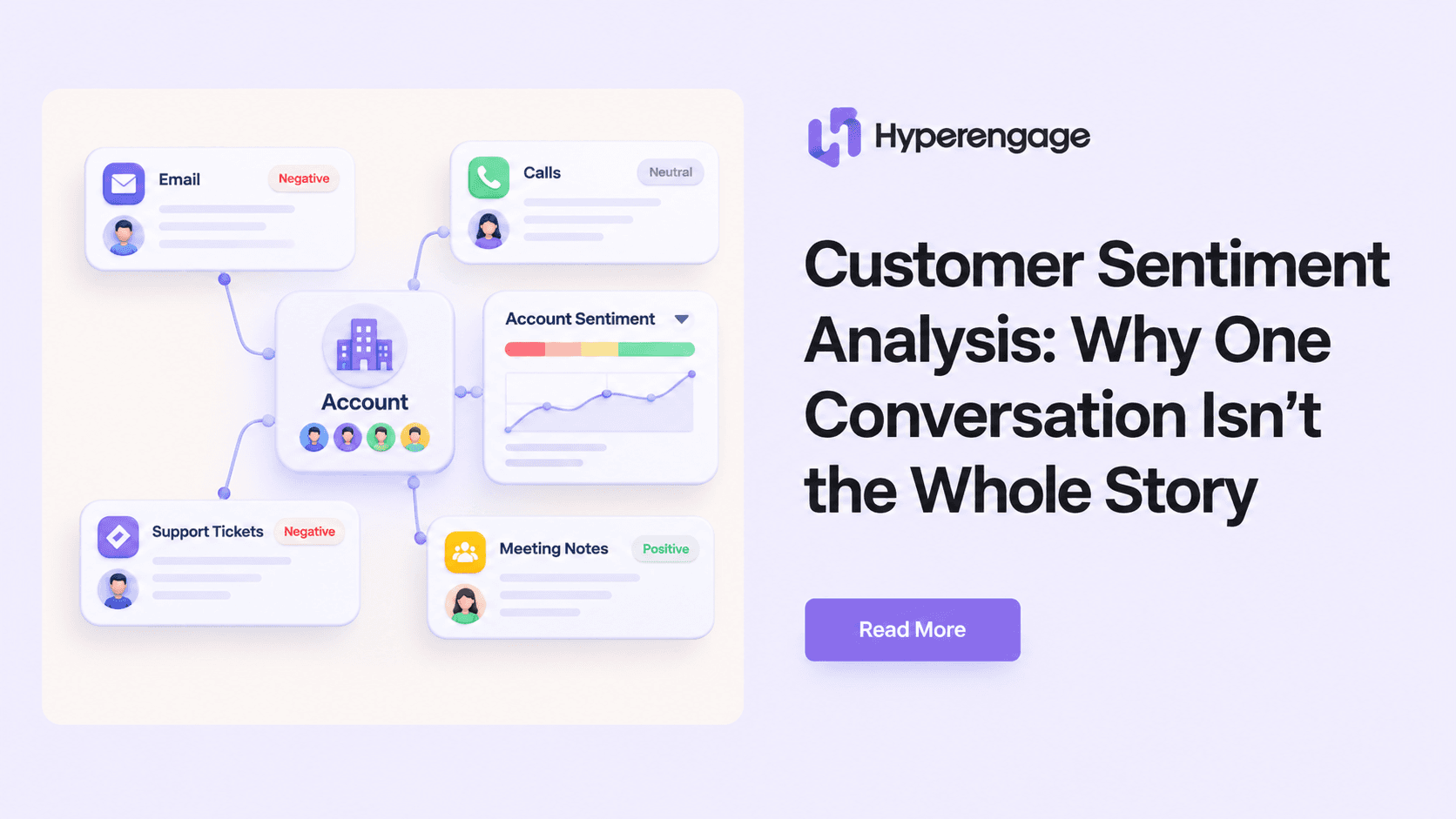
The most useful lens for comparing tools is where their signal actually comes from. Usage-based platforms pull from product telemetry: logins, feature adoption, API calls, seat activation. Relationship-based platforms pull from people: CSM notes, sentiment from calls, survey responses, support ticket tone.
Neither is sufficient alone, and this is where a lot of buying decisions go wrong. Teams that lean entirely on usage data can miss a champion who quietly left the company even though the product is still being used by their replacement. Teams that lean entirely on relationship data get blindsided when a customer says everything’s fine on a call and then doesn’t renew, because nobody was watching that their usage had already dropped forty percent. The strongest engagement scoring blends both, and during evaluation you should ask exactly how a vendor weights one against the other, not just whether they claim to have both.
A Health Score Is Only as Honest as What Feeds It
Vendors love to demo a clean dashboard with a green, yellow, and red status for every account. What they don’t show you in the demo is how the score gets calculated, and that’s the part that determines whether you’ll trust it six months from now.
A score built on three or four well-weighted signals that map to your actual churn drivers will hold up. A score built on twelve inputs thrown in because they were technically available will drift, contradict itself, and eventually get ignored by your CSMs, which defeats the purpose of buying the tool in the first place. Ask the vendor to walk you through exactly which of their default inputs correlate with churn in similar customer bases, not just which inputs they collect. If they can’t answer that with specifics, they’re selling you a dashboard, not a prediction engine.
Real-Time Beats Lagging, But Only With a Human on the Other End
Some signals are lagging by nature. NPS surveys, quarterly business reviews, and contract renewal dates all tell you something after the fact. Real-time signals, like a sudden drop in daily active users or a spike in error rates a customer is hitting, can flag a problem while there’s still time to fix it.
The instinct is to assume real-time always wins, but predicting a problem only matters if someone is positioned to act on it before the customer decides they’re done. A real-time alert that lands in a Slack channel nobody checks is worse than a quarterly review, because it creates a false sense of coverage. When evaluating a tool, ask not just how fast it detects a risk signal, but what the actual workflow looks like between detection and a CSM taking action. If the answer is vague, that’s the gap where accounts quietly slip through.
More Tools Is Not the Same as More Signal
There’s a version of this evaluation process that goes wrong in the opposite direction: buying every tool that promises a piece of the picture until your CS team is logging into five different dashboards to answer one question.
Kelly McGuire, VP of Customer Success at Everstage, described this exact trap on the Across the Funnel Podcast:
“In this world of millions of tools, I am probably more selective than the average CS leader on throwing tools at my people. It’s not that I’m against them. I am very much a lover of modern technology. But a lot of them are homework assignments and headaches and noise.”
That word, noise, is the right frame for evaluation. Every additional tool has to earn its place by reducing the number of places a CSM has to look, not adding one more. If a new platform can’t consolidate signals your team is currently piecing together manually across a CRM, product analytics, and support tickets, it’s not solving the problem you set out to fix. It’s adding to it.
What to Actually Ask in the Demo
Once you’ve named the specific business question, the signal type you need, and how the score should be built, the demo becomes much easier to sit through, because you’re evaluating against a standard instead of being sold a feature tour. A few questions worth asking directly, in this order:
Which specific behaviors in your customer base predict churn, and can the vendor show that correlation with real data rather than a generic claim. Whether the tool’s default health score can be reweighted to match your churn drivers, or whether you’re stuck with their assumptions. How deep the integration goes into your actual CRM and product data, not just whether an integration exists, since a shallow sync that misses half your fields will quietly corrupt every score built on top of it. What happens operationally between a risk signal firing and a CSM seeing it, and how many clicks separate detection from action. And finally, what this tool replaces versus what it adds, because if the answer is “nothing, it’s additive,” you’re buying noise regardless of how good the demo looked.
None of this requires naming any vendor in your evaluation. It requires being specific about your own churn drivers before you let a sales deck define them for you.
Conclusion
The tools on the “best of” lists aren’t lying to you exactly. They’re just all answering different questions while using the same vocabulary, and the burden falls on the buyer to translate. A platform that predicts churn from usage signals and a platform that manages loyalty points both call themselves customer retention software, and both will show you a dashboard with a health score on it. The difference is in what feeds that score, how fast it updates, and whether anyone on your team is positioned to act on it before the customer has already decided to leave. Get specific about your own churn drivers first. Everything else in the evaluation follows from that.