Every company says it. Every deck has a slide for it, usually wedged between “our mission” and “our values,” next to a stock photo of two people high-fiving over a laptop. Customer-centric. Say it in a board meeting and nobody blinks. Say it in a job posting and every CSM candidate nods along, because they have heard the same line at every company they have worked for, including the one that laid off half its customer success team six months after saying it.
The word has not lost its meaning because it is fake. It has lost its meaning because almost nobody checks the label against the ingredients.
The substitution most companies have made, usually without noticing, is specific: they have swapped genuine attention to whether a customer is getting real value for close attention to whether a customer is about to renew. Those two things overlap often enough that the swap goes unnoticed for years. The gap between them is where most post-sales organizations quietly spend their entire operating budget.
Customer centricity, the actual concept, is a claim about what drives decisions. It says the customer’s outcome is the thing you optimize for, and revenue follows from that.
Renewal-centricity inverts the order. Revenue, specifically the renewal date, becomes the thing you optimize for, and customer language gets used to describe the activity around it. The tell is never in what people say. It’s in what gets measured, what gets escalated, and what gets a task assigned to it ninety days before a contract expires versus ninety days after a customer went live.
The Language Survives Long After the Practice Changes
Ask most CS leaders what their team is there to do and you will get some version of “help customers succeed with the product.” Ask what their team gets evaluated on and the answer narrows fast: gross retention, net retention, churn rate, save rate.
None of those are bad metrics. They are lagging indicators of whether value got delivered, not measures of whether it did. A team can hold a strong retention number for a year or two on the strength of contract length and switching costs, while the actual product experience quietly degrades. The renewal number looks fine right up until it does not.
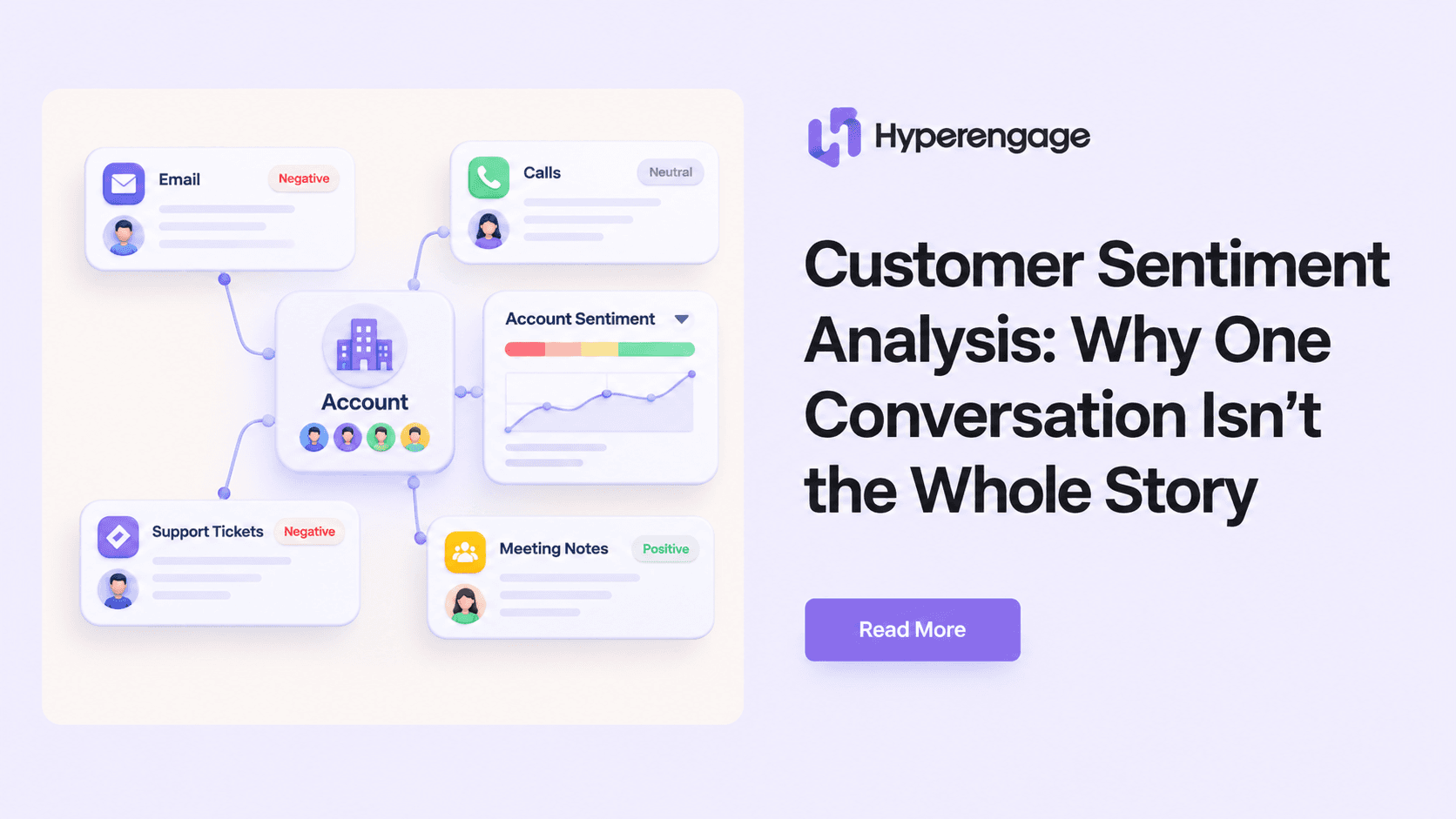
This explains something practitioners feel more than they say out loud. The QBR deck template, the health score that flips red thirty days before a contract date rather than thirty days after a usage drop, all of it was built to protect a specific commercial event. Calling that customer-centric is not dishonest exactly. It is imprecise in a way that has consequences, because a team optimizing for the renewal date makes different choices than a team optimizing for the customer’s actual progress, and most people cannot articulate which one their org has actually built for.
What Renewal-Centric Looks Like From the Inside
It rarely announces itself. Nobody schedules a meeting to formally adopt renewal-centricity. It shows up in smaller decisions that compound:
- The health score gets weighted more heavily toward days-to-renewal than toward product usage depth.
- The “at risk” playbook triggers when a contract is sixty days out, rather than when adoption actually stalls.
- The CSM’s calendar fills with save-play calls for accounts that have been quietly disengaged for months, because urgency only became visible once the invoice was imminent.
Everyone can describe this pattern from a job they have had. Almost nobody would describe their current job this way, which is itself informative.
The deeper tell is in what happens to a healthy account between renewals. If a team is genuinely customer-centric, the twenty months between one renewal and the next get the same attention as the two months before it. If a team is renewal-centric, that middle stretch is where CSMs get quietly reassigned to firefighting, and the healthy accounts get left alone, because nothing about them is generating urgency.
Value creation, adoption, and account health do not wait for a calendar date to matter. By the time renewal urgency kicks in, the outcome was mostly decided months earlier.
The Substitution Nobody Names
Part of why this substitution is so durable is that the two failure modes look identical from a distance. A customer who is genuinely thriving usually renews. A customer who is being carefully managed toward a renewal, with check-ins timed to the contract clock rather than to their actual usage patterns, often renews too, at least for a cycle or two.
It’s only over multiple cycles, as expansion revenue lags and net retention drifts down even while gross retention holds, that the difference becomes visible in the numbers rather than just in how the work actually gets done.
This is also why the substitution survives leadership changes and org redesigns. A new VP of Customer Success inherits a health score, a QBR cadence, and a set of playbooks that were all built around protecting renewal revenue, and unless they specifically go looking for it, there is nothing in the tooling that flags this as a design choice rather than a neutral best practice. The org chart says customer success. The actual operating rhythm says renewal protection. Nobody wrote that down anywhere, which is exactly why it persists.
Why the Signals Have to Come From Somewhere Other Than the Calendar
The fix is not more attention closer to renewal. It’s a different source of signal entirely, one that does not care what quarter it is. This is the argument behind treating product usage and engagement data as the actual leading indicator, rather than treating the contract date as the trigger for attention.
David Karp, SVP of Customer Success at Billtrust, made this point on the Across the Funnel Podcast when describing how his team decides whether an account needs attention. He explained that once you have the right data and context in place, it becomes straightforward to build a set of signals that tell you whether an account is on or off track for the adoption journey it should be on, and then design the right intervention from there.
“If I understand by cohort of customer where they should be in their adoption journey, usage journey, value journey from our products, it’s really easy for me to create a set of signals that say you are on or off track, and then go design the right interventions to help them get on track. And a lot of those don’t have to be human dependent.”
Notice what is absent from that description. There is no mention of a contract date. The signal comes from where the customer actually is relative to where they should be, not from how many days remain on the agreement. That is a structurally different design than a health score built around a renewal countdown, even if both eventually feed into the same retention number.
Churn Is a Symptom, Not the Problem You Are Actually Solving
The other half of this is knowing where not to look. Teams that are renewal-centric tend to spend their urgency and their best people at the exact moment a customer is already leaving, running save plays on accounts that had one foot out the door for months before anyone noticed. That energy is being spent on the lowest-percentage activity in the entire customer lifecycle, and it’s being spent there specifically because the renewal date is what finally made the disengagement visible.
Lincoln Murphy, former VP of Customer Experience at ListKit, made a version of this argument on the Across the Funnel Podcast that is worth sitting with. He argued that churn itself is not the actual problem a CS org is solving.
“Churn isn’t the issue. Even when you have a lot of churn, churn is not the issue. Churn is a symptom of another issue. So churn is just the thing that tells us something isn’t working.”
His point was not that churn should be ignored. It was that a team fixated on the churn number ends up putting its energy at the end of the customer lifecycle, at exactly the moment when the least can be done about it, instead of putting that same energy into onboarding and the long ongoing-engagement stretch where the actual outcome gets decided. A renewal-centric org structurally cannot help doing this, because its entire attention system is wired to the contract clock rather than to the customer’s actual trajectory.
What Genuine Centricity Would Actually Require
If the goal is real customer centricity rather than a renewal program with better branding, two things have to change, and both are uncomfortable for most orgs:
- The signals that trigger CSM attention need to be decoupled from the renewal date entirely. Health has to be assessed by comparing where an account actually is against where it should be for its cohort and its stage, not by counting down days on a contract. That requires a genuine, current view of account health, drawing on CRM activity and product usage together rather than either one alone, which is a large part of why platforms built around this kind of account intelligence, including Hyperengage, exist as a category at all.
- The org has to be willing to say no to work that looks urgent. If save plays are consistently happening in the final sixty days before a renewal, that’s evidence the attention system is only detecting risk once it’s already close to unrecoverable. The fix isn’t working the save plays harder. It’s moving the detection point earlier, which usually means fewer, calmer interventions spread across the account lifecycle instead of a cluster of frantic ones right before the contract date.
Neither of these is a tooling problem you can solve with better dashboards layered on top of the same renewal-triggered process. Both are design problems about what actually causes a CSM’s calendar to fill up.
Conclusion
Most teams that call themselves customer-centric are not lying. They are describing an intention that got quietly replaced by an operating rhythm nobody chose on purpose.
The renewal date is not a bad thing to track. It becomes a problem the moment it’s the primary thing that decides where attention goes, because by the time a contract clock creates urgency, the customer’s actual trajectory was usually set months earlier.
The teams that close that gap are not the ones with the best-sounding values slide. They are the ones willing to ask what their health score is actually built around, and to change it when the honest answer is a date on a calendar rather than the customer sitting in front of it.